

Field notes
Republic Denounces Turkish Presence at Molos Airfield
The government of Altis and Stratis says Turkish forces have established an unlawful position at Molos Airfield, marking the clearest rupture yet between covert pressure and open intervention.
Republic Denounces Turkish Presence at Molos Airfield
Meridian News Network (MNN)
April 14, 2025
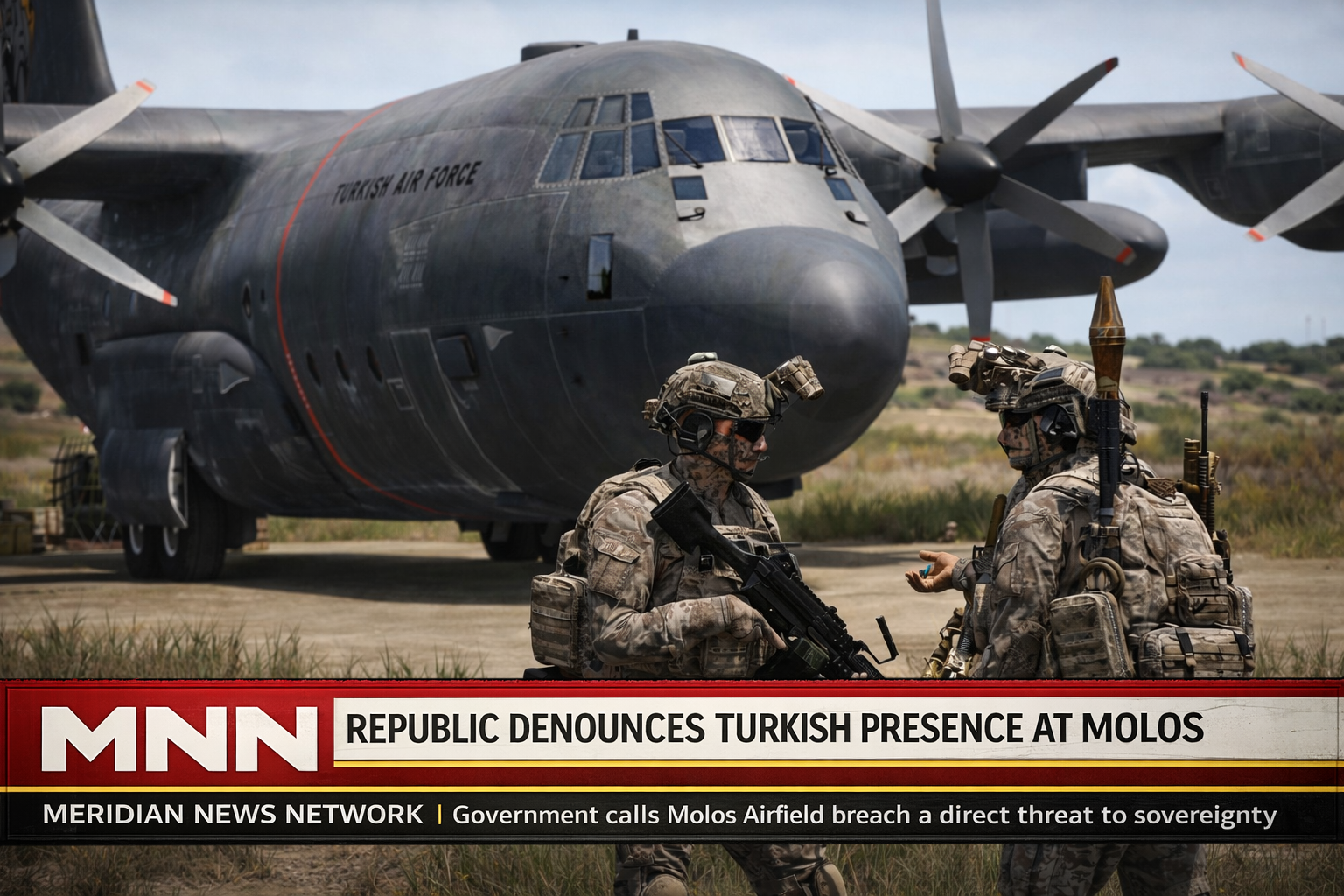
PYRGOS, ALTIS - The government of the Republic of Altis and Stratis has issued its strongest condemnation yet of Turkish involvement in the Poseidon Crisis, accusing Ankara of establishing an unlawful military presence at Molos Airfield and warning that the island’s escalating disorder has now become a direct challenge to national sovereignty.
Officials stopped short of calling the development a formal declaration of war. Even so, the language used by both civilian and defense authorities made clear that the Republic no longer views the situation only as a matter of internal unrest sharpened by outside influence. In their account, a foreign military power is now operating openly on Altian soil.
The statement follows days of rising pressure after Turkey warned that instability on Altis threatened the Poseidon Reserve and suggested that the Republic might no longer be able to secure strategically important infrastructure. What had previously sounded to many observers like coercive diplomatic framing now appears, at least from the Republic’s perspective, to have been a prelude to direct intervention.
Government Frames Molos as an Open Breach
At a briefing in Pyrgos, senior officials said the situation at Molos Airfield represented an illegal foreign military foothold established during a moment of internal crisis.
Authorities accused Turkey of exploiting the Republic’s ongoing security operations in western Altis and of using the broader instability on the island as cover to alter facts on the ground. They also rejected any Turkish claim that its actions were defensive, humanitarian, or aimed solely at infrastructure protection.
“No external state has the right to insert military force into the sovereign territory of the Republic under the pretext of restoring order,” one government spokesman said. “This is not stabilization. This is coercive intrusion during a national emergency.”
The Republic has not yet publicly detailed the full size of the force believed to be present at the airfield. It has, however, insisted that any unauthorized Turkish military presence constitutes a direct violation of Altian sovereignty.
From Covert Pressure to Open Intervention
For much of the past year, foreign involvement in the crisis was discussed in indirect and often deniable terms.
Reports of outside funding, better-armed opposition cells, and the shadowy figure known as The Turk had gradually reinforced the belief that some external actor was helping shape events on Altis from behind the scenes. The operation around Molos appears to have changed that.
According to officials and analysts, the emerging picture suggests that local fighters were used to draw police and AAF attention away from the airfield while a wider move unfolded in parallel. That reading aligns with mounting concern that the conflict is no longer being driven only by armed opposition activity, but by an increasingly direct foreign design linked to control, access, and leverage around the Poseidon Reserve.
Several analysts also say the breach cannot be separated from the earlier destruction of the Northern Radar Installation. By knocking out one of the Republic’s key northern surveillance nodes days earlier, the attackers may have helped create a blind spot that reduced warning time and made it easier for Turkish aircraft or supporting movements tied to Molos to avoid early detection. If that assessment holds, the radar strike and the airfield seizure will be understood less as separate escalations than as successive parts of the same operational design.
That is why the Molos development matters beyond the town itself. It marks the point at which the line between covert destabilization and overt intervention may have effectively collapsed.
Pressure on a Government Already Stretched
The timing is especially difficult for the Republic.
In recent days, the government had already been under growing strain after AAF sweep operations in northwestern Altis revealed stronger resistance than expected. Those operations were meant in part to show that the state could still impose control after the destruction of the Northern Radar Installation, but they also tied down military attention and exposed the depth of the challenge facing the armed forces.
Now the government faces a different order of crisis. It must respond not only to insurgent violence and domestic instability, but to the apparent reality that a regional power has moved from indirect influence to open military presence on the island.
Analysts say that shift could force difficult decisions quickly. A weak response risks signaling that the Republic cannot defend its own territory. A stronger response, however, could accelerate a confrontation for which the state may be politically and militarily unprepared.
Regional Stakes Rise Sharply
The Molos development is also likely to deepen alarm well beyond Altis.
The Poseidon Reserve had already transformed the island’s instability into a matter of regional strategic concern. If Turkey is now prepared to establish and defend a position on Altis directly, the crisis may no longer be containable as a domestic security collapse with foreign complications. It may instead be entering a phase defined by military access, sovereignty disputes, and competing claims over who has the right to shape the island’s future.
That possibility is what gives the current moment its wider significance. A crisis that began with economic breakdown, civil unrest, and scattered violence is now being described in the language of territorial breach and external force.
For the Republic, the message is stark: what was once a struggle to contain internal fragmentation may now become a struggle to resist open foreign intervention on its own soil.
Related coverage
Follow the wider story
Move from the report to the linked operation and adjacent reporting to keep the Poseidon Crisis thread connected.
Flights Continue Into Molos as Turkish Position Grows
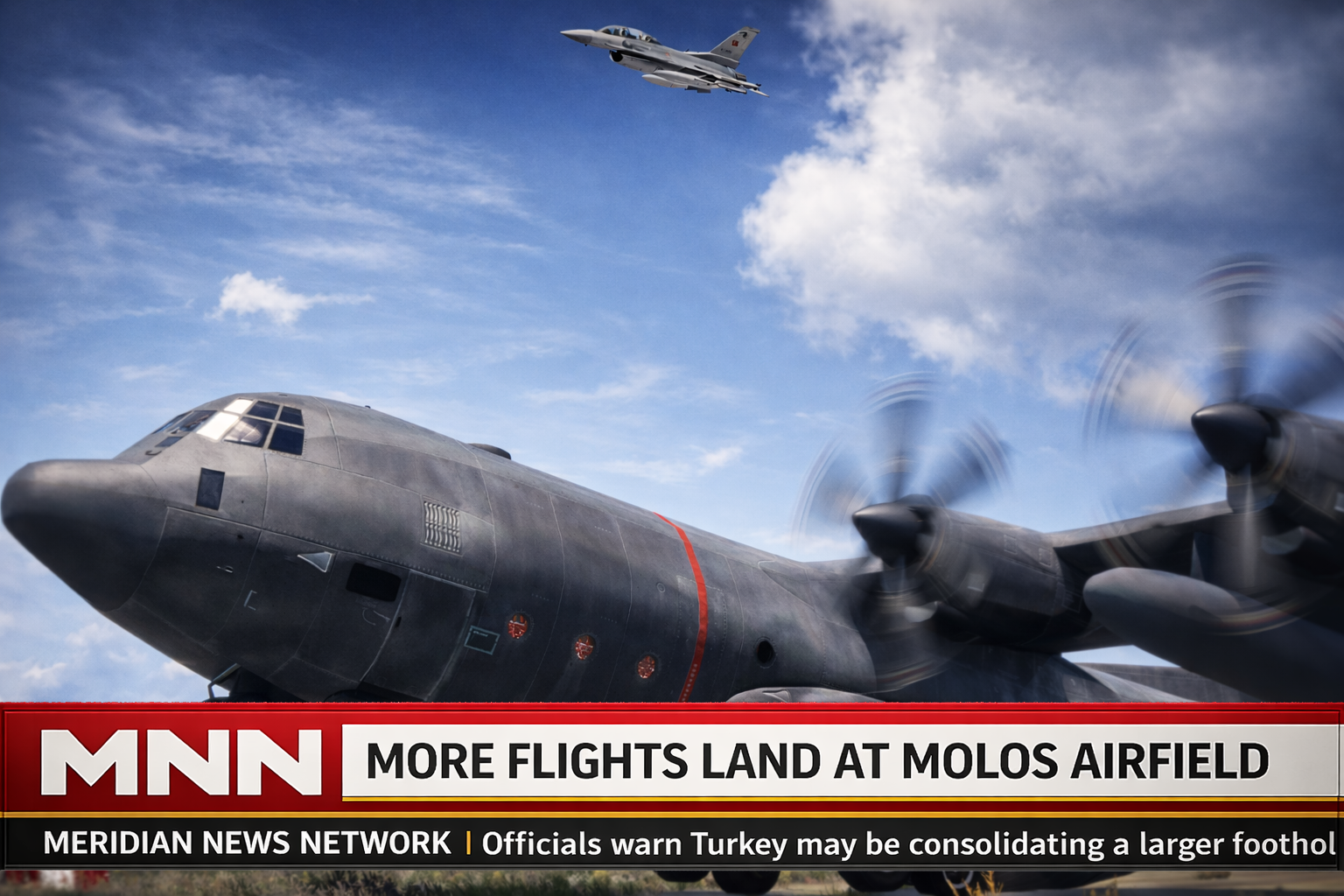
Repeated transport flights into Molos Airfield are fueling fears that Turkey is reinforcing for a larger operation rather than holding a limited position.
Turkey Warns Altis Instability Puts Poseidon Reserve at Risk
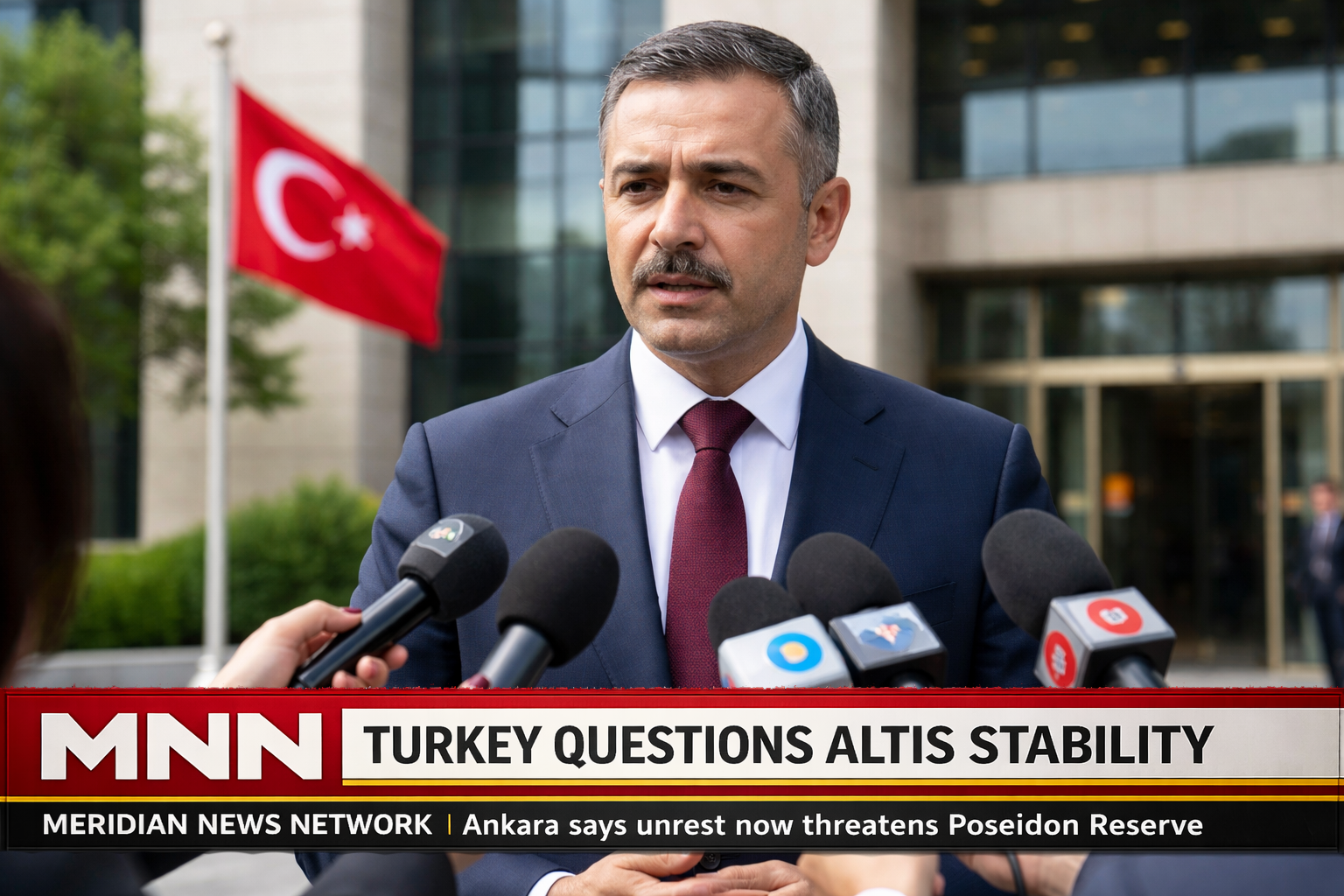
Turkish officials say worsening disorder on Altis now threatens regional energy security and the safety of critical infrastructure tied to the Poseidon Reserve.
AAF Sweep in Northwest Altis Reveals Higher-Than-Expected Resistance
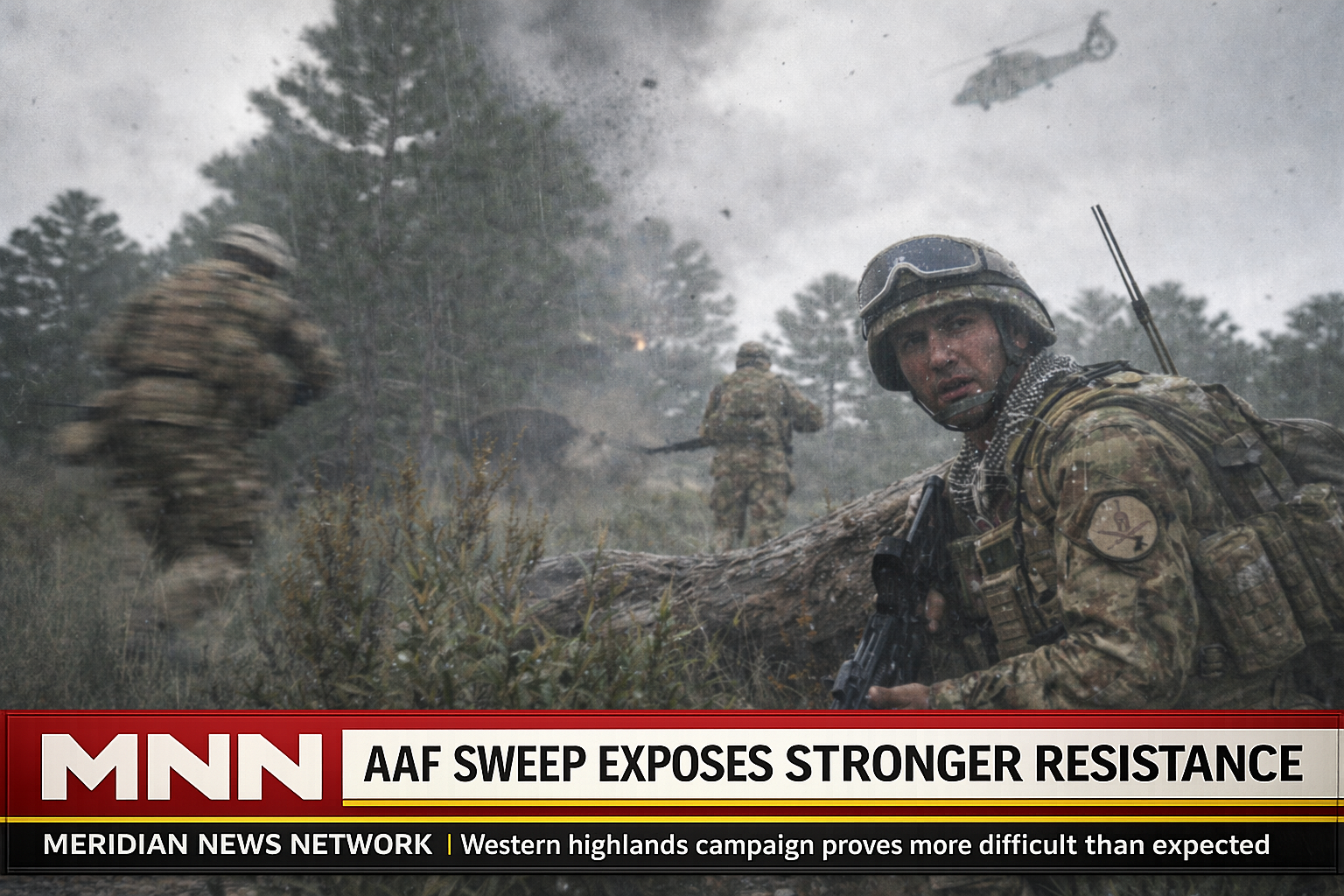
Sweep operations in northwestern Altis have exposed a more capable and more deeply rooted armed opposition presence than many officials initially suggested.