

Field notes
The Poseidon Crisis
A geopolitical crisis on Altis triggered by economic collapse, the discovery of the Poseidon Reserve, and escalating tensions between Turkey and the Republic of Altis and Stratis.
Overview
The Poseidon Crisis was a geopolitical conflict centered on the Republic of Altis and Stratis whose buildup accelerated after the 2024 Discovery of the Poseidon Reserve, a massive natural gas find beneath the eastern Mediterranean, and whose opening phase took shape in 2025.
The reserve was estimated to contain more than 30 trillion cubic feet of natural gas, making it the largest energy discovery ever identified in the region.
The discovery rapidly transformed Altis from a fragile Mediterranean state into a strategically vital energy hub. Competing economic interests, territorial claims, and long-standing rivalries across the Mediterranean soon placed the island at the center of a growing international crisis.
As inflation surged, shortages spread, and trust in the civilian government collapsed, protests expanded across the major cities of Altis. The armed forces of the Republic of Altis and Stratis were increasingly deployed in a domestic security role, placing soldiers between a frustrated population and a government unable to restore stability. That burden ultimately fell under the command of Colonel Konstantinos Drakos, one of the last broadly respected senior officers still identified with constitutional service rather than political ambition.
In the shadow of this unrest, decentralized anti-government cells collectively known as the Altian Opposition Networks began to grow. They were fragmented and lacked a unified ideology, but some soon became more capable than others.
Those select groups appeared to be receiving funding, weapons, and coordination from an unknown external source. Among the armed cells, a single codename began circulating for the individual believed to be directing this support: The Turk, later identified as Turkish brigadier general Arda Aydin. The label would first spread quietly through insurgent circles before appearing in AAF intelligence assessments as concerns over foreign involvement grew.
The first major overt act of the crisis occurred when opposition fighters launched the Destruction of the Northern Radar Installation, a coordinated strike against an AAF surveillance site in northern Altis. Though initially dismissed as an isolated act of sabotage, the strike would later be recognized as the moment the crisis moved unmistakably from destabilization into open armed escalation.
The conflict would eventually escalate beyond insurgency into a broader confrontation involving the Altis Armed Forces (AAF), foreign pressure, and mounting international tensions.
Background
The Poseidon Crisis grew out of a domestic political and economic breakdown rooted in the Altian Economic Crisis, but the Discovery of the Poseidon Reserve quickly turned Altis into one of the most contested strategic locations in the eastern Mediterranean. Economic leverage, military posturing, and covert destabilization efforts all converged on the island at once.
Within the War is Hell chronology, the Poseidon Crisis functions as an earlier destabilization phase in the history of Altis and Stratis. Rather than replacing the later major events of official ArmA 3 lore, it is intended to help explain the worsening national conditions that would eventually contribute to the Republic’s later collapse into wider conflict.
Strategic Importance
Control over Altis and Stratis meant influence over one of the region’s most significant newly discovered gas reserves, as well as a forward position for naval, intelligence, and air operations across the Mediterranean. That combination made the crisis larger than a local insurgency and pushed it toward an international flashpoint.
Main Participants
The principal actors in the Poseidon Crisis were the Republic of Altis and Stratis, its armed forces, the Altian Opposition Networks, and the foreign backers linked to Arda Aydin and Turkey. The crisis entered its opening phase in 2025, though its buildup stretched back to the 2024 discovery of the Poseidon Reserve and the worsening domestic breakdown that followed. In narrative terms, these developments are best understood as a prelude to the later canonical conflicts on Altis rather than an alternative to them.
Opening Armed Escalation
The shift from destabilization into open armed conflict became much clearer in early April 2025. On the night of April 5, 2025, an AAN news crew was killed in Kavala and their van and equipment were taken, an event initially reported as an unresolved act of violence with no clear suspects.
By the morning of April 6, 2025, that same stolen press vehicle had been used by opposition fighters to approach the Northern Radar Installation under the cover of a pre-cleared media visit. The raid that followed destroyed the installation and inflicted significant casualties on the AAF. More importantly, it showed that some cells inside the Altian Opposition Networks were now capable of deception-based infiltration, coordinated assault, demolition, and withdrawal under pressure.
This sequence matters because it provides one of the clearest early examples of how the crisis was being driven not only by domestic collapse, but by increasingly capable armed actors working with outside coordination. In both operational and symbolic terms, the radar strike marked the moment the Poseidon Crisis could no longer be understood as unrest alone. It had become a conflict in which state military positions were now deliberate targets.
Northwestern Altis Sweep
On April 9, 2025, in the immediate aftermath of the Destruction of the Northern Radar Installation, the Republic ordered AAF elements into northwestern Altis to locate and disrupt suspected opposition cells believed to be using the western highlands as a sanctuary. What was expected to be a forceful sweep through difficult but manageable terrain instead exposed a more dangerous reality.
During these early operations, formations including 2nd Squad, 3rd Platoon under Sergeant Elias Vardas encountered opposition fighters who were better armed, better positioned, and more tactically disciplined than earlier assessments had suggested. Mortar support, helicopter overwatch, and mechanized support remained available to the AAF, but contact in the hills showed that local armed elements could still absorb pressure, stage ambushes, and inflict losses.
The sweep therefore marked an important second step in the opening phase of the crisis. If the radar strike demonstrated that select opposition cells could hit state infrastructure, the fighting in northwestern Altis showed that the Republic was also facing a broader rural insurgent problem that could not be resolved by a single retaliatory action. For commanders such as Drakos, it was one of the clearest signs that the military crisis was expanding faster than the state could politically manage.
April 13 Turning Point
By April 13, 2025, that widening crisis crossed another threshold. While the AAF remained heavily focused on the western highlands after the northwestern sweep, other opposition elements continued operating elsewhere on Altis with far less scrutiny. That imbalance created the conditions for a more carefully staged operation around Molos and Molos Airfield.
During that operation, Sigma Team under Niko Lykos used a strike on local power infrastructure and a planned urban holdout to draw police and AAF personnel away from the airfield. Fighters such as Andreas Markakis, Lukas Rigas, and Dorian Leventis believed they were carrying out a dangerous diversion. In reality, they were helping prepare the ground for a much larger move.
The decisive change came when Turkish forces appeared openly at the airfield and Arda Aydin was revealed as the figure previously known only as The Turk. What had previously been understood as covert outside influence and indirect support could no longer be described in those terms alone. The Poseidon Crisis had become an overt international confrontation tied directly to military intervention, strategic infrastructure, and the future control of Altis. That escalation point is explored more directly in Turkish Landing on Altis.
That shift is also why the earlier radar strike took on greater meaning in hindsight. Once Turkish forces were found at Molos, the Destruction of the Northern Radar Installation no longer looked only like a symbolic or tactical blow against the state. It also appeared to have helped create a temporary surveillance gap in northern Altis, reducing warning time and making the later airfield operation easier to execute.
This moment is one of the clearest turning points in the campaign. Up to that stage, the crisis could still be interpreted as domestic collapse sharpened by hidden foreign pressure. After April 13, the distinction between internal conflict and external intervention no longer held. The struggle for Altis had entered a broader and more dangerous phase.
From Intervention to Open War
The next development on April 13, 2025 removed the last remaining ambiguity about what that broader phase meant in practice. After Turkish forces secured Molos Airfield, Colonel Konstantinos Drakos agreed to attend a meeting requested by Brigadier General Arda Aydin in an effort to determine whether Turkey was seeking leverage, negotiation, or something more sweeping. Instead, Drakos was confronted by Turkish officers attempting to compel his surrender and was killed when he refused.
The attack that followed made the situation unmistakable. Turkish forces moved quickly against the nearby AAF position, and soldiers under Lieutenant Adrian Kassos and Sergeant Elias Vardas were forced into one of the first direct defensive engagements between the AAF and an invading foreign military force. Although the Altian defenders inflicted heavier losses than expected, they were unable to hold the installation and were forced to withdraw.
This sequence matters because it changed the meaning of the crisis again. The Turkish landing had already turned covert influence into open intervention. The killing of Drakos and the fighting that followed turned intervention into direct war between the Republic and Turkey. From that point forward, the central question of the campaign was no longer whether outside powers were shaping events on Altis. It was whether the Republic could survive a widening military assault on its own territory.
Drakos’s death also shifted the internal balance of the AAF itself. With him gone, command passed to Colonel Georgious Akhanteros, a more ambitious and politically dangerous officer whose rise links the Poseidon-era breakdown more directly to the harsher command environment associated with later ArmA lore.
The Stalled Advance Near Sophia
The first days after the Turkish landing did not produce the kind of rapid breakout some observers feared. Although Turkish forces had secured Molos Airfield and forced the crisis into open war, losses suffered during the initial fighting near Sophia, the limits of a short-runway entry point, and sustained AAF artillery pressure combined to slow the advance more than Ankara likely expected.
For a brief period, this gave the Republic of Altis and Stratis something it badly needed: time. AAF units were able to begin forming a more coherent defensive line while artillery batteries punished the narrow ground Turkey needed to cross in order to expand inland. In practical terms, the war had entered a short but important phase in which Turkish forces held a dangerous foothold without yet turning that foothold into full momentum.
That situation began shifting again on April 16, 2025, when opposition-linked fighters ambushed an AAF convoy believed to be moving additional artillery near Sophia and then pushed a nearby gun position under Turkish-supported pressure. The destruction of the convoy and the disabling of the battery did not decide the campaign by themselves, but they helped remove one of the clearest immediate obstacles slowing the Turkish advance. In historical terms, the action marks a point at which open war on Altis began moving from shock and containment toward a more fluid contest over whether Turkey could break out from the Molos-Sophia corridor.
By nightfall on April 16, 2025, that more fluid phase was already visible on the ground. AAF units were being forced to fall back and reposition as Turkish-supported momentum increased along the same corridor, and the roads south of the fighting grew less secure.
That same night, elements of the AAF conducted a secret coastal pickup that revealed the arrival of Greek special forces advisers in a clandestine role. This did not amount to open Greek entry into the war, but it did show that the conflict over Altis and the Poseidon Reserve was beginning to draw in outside actors beyond Turkey in more direct ways.
As the Republic tried to reorganize, attention increasingly turned toward the ground near Telos, one of the few remaining stretches where Turkish forces could still be funneled and delayed.
Related reporting
Read the wider story around this reference page
These linked reports and operations connect this reference page to the campaign developments and episodes where the story moves.
Republic Launches Investigation After Northern Radar Installation Destroyed
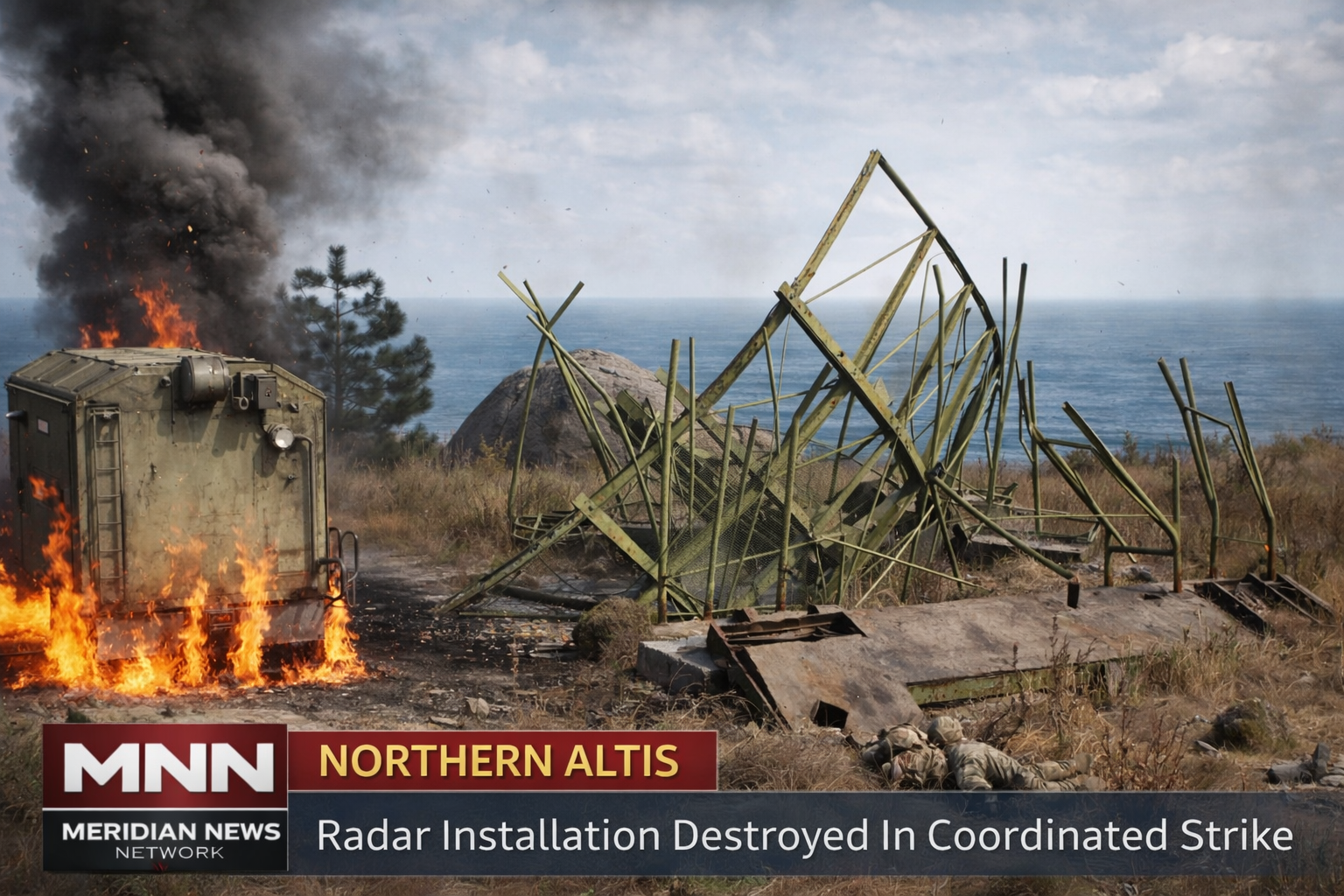
The destruction of the Northern Radar Installation has prompted a widening investigation on Altis, with officials examining possible links to the killing of an AAN news crew in Kavala hours earlier.
AAN News Crew Killed in Kavala as Van and Equipment Vanish
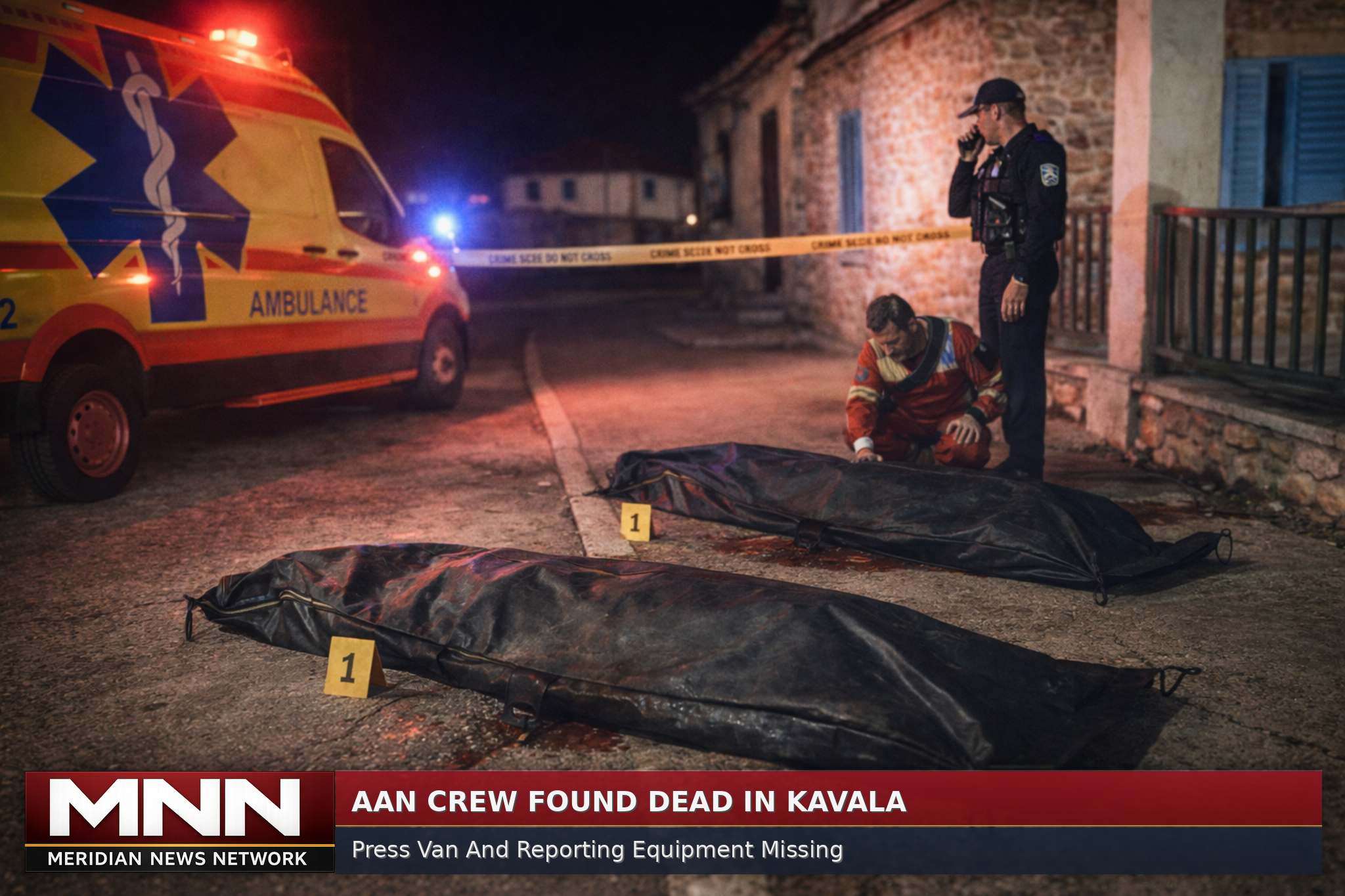
An Altis Action Network crew was found murdered in Kavala on April 5, 2025, with their van and reporting equipment missing and no immediate leads for investigators.
Defense Ministry Signals Imminent Northwest Altis Operation
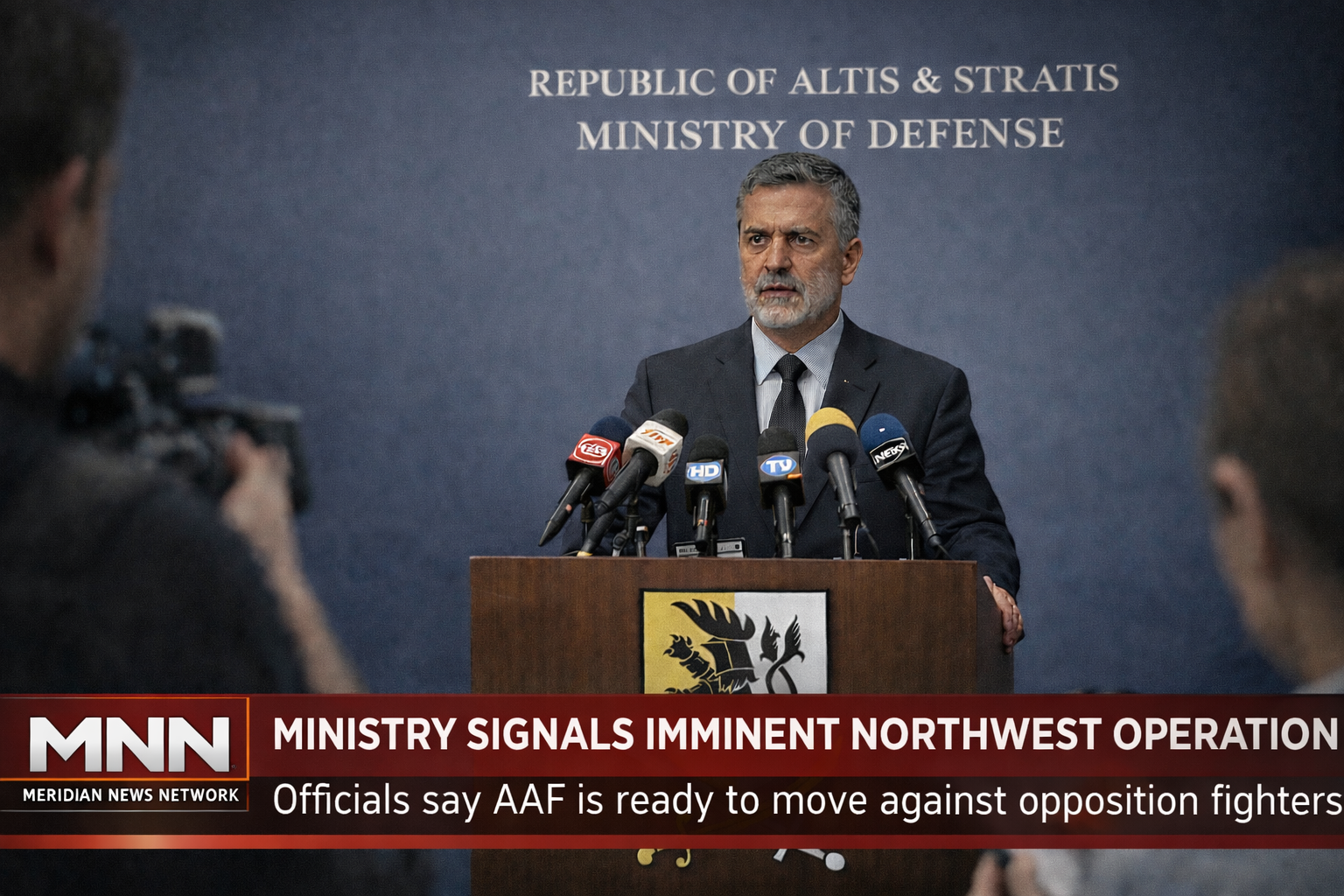
The Republic's Defense Ministry says AAF forces are preparing for operations in northwestern Altis after new intelligence reinforced concerns over armed opposition activity in the region.