

Field notes
Turkey
A major regional power and NATO member whose strategic ambitions around Altis evolved from covert influence into direct military involvement during the Poseidon Crisis.
Overview
Turkey is a major regional power and NATO member whose strategic interests increasingly place it at the center of rising tensions in the eastern Mediterranean. Following the discovery of the Poseidon Reserve, Turkey emerged as a key actor seeking to shape the future of Altis and the surrounding region.
In the War is Hell setting, Turkey plays a critical role in the evolving geopolitical landscape following the discovery of significant offshore energy resources near Altis.
While maintaining its position within NATO, Turkey has begun to assert a more independent and regionally focused foreign policy. Its actions reflect a growing emphasis on energy security, economic opportunity, and strategic influence in the Mediterranean.
Strategic Interests
Turkey’s primary interest in Altis stems from the discovery of the Poseidon Reserve. The reserve represents a potentially transformative economic asset, with the ability to shift regional power dynamics and redefine control over energy distribution routes. From Turkey’s perspective, influence over Altis would provide access to emerging energy infrastructure, increased leverage in regional economic and political negotiations, and a stronger strategic position in the eastern Mediterranean.
Regional Tensions
The status of Altis has become a point of contention, particularly between Turkey and Greece. While Altis remains an independent nation, Greece maintains close ties and a strategic defense relationship with the island.
These overlapping interests have led to increased friction, with both nations viewing Altis as critical to their long-term strategic positioning.
Turkey has expressed concern over the stability of Altis, citing the island’s worsening economic crisis, political instability, and the risk of internal conflict.
Position Within NATO
As a NATO member, Turkey occupies a unique and complex position within the alliance. Its strategic importance, geographic location, and military capabilities make it a key partner, while its regional ambitions occasionally place it at odds with other member states.
The situation surrounding Altis presents a challenge for NATO, as tensions between member states risk complicating a unified response.
Public Position
Turkey has publicly emphasized the importance of stability in Altis, warning that recent developments could lead to unrest and state failure. Officials have pointed to economic breakdown, widening protests, and armed opposition activity as reasons for concern, suggesting that preventative action may be necessary to avoid escalation.
Behind the scenes, Turkish-linked intermediaries are believed to have provided covert support to select elements within the Altian Opposition Networks. Publicly, Ankara frames its posture as a stability mission. Privately, the objective is widely understood to include influence over the Poseidon Reserve and the balance of power around Altis.
By April 2025, that public line hardened further. Turkish messaging increasingly emphasized the Republic’s inability to protect critical infrastructure, maintain domestic order, or guarantee the security of the reserve. This rhetorical groundwork later became part of the justification for overt action on the island.
Role in the Crisis
In the context of the Poseidon Crisis, Turkey functioned first as an external regional power pursuing energy access, strategic influence, and political leverage around Altis through covert means. Its rivalry with Greece, NATO membership, and interest in the future of the Poseidon Reserve made it one of the most consequential outside actors in the conflict even before its role became openly visible.
That changed dramatically on April 13, 2025, when Turkish forces appeared openly at captured Molos Airfield on Altis and Arda Aydin was revealed as the figure previously known only as The Turk. At that point, Turkish involvement could no longer be understood only as covert backing for selected opposition cells. It had become direct military intervention framed by Ankara as a necessary act to restore order, secure infrastructure, and prevent the Republic from collapsing further.
This shift is one of the defining escalations of the campaign. It places Turkey not merely among the outside powers competing over Altis, but among the principal actors actively shaping the crisis on the ground.
The first days of that intervention also revealed one of its immediate limits. Although Turkish forces had secured Molos Airfield and forced the Republic into open war, the advance inland slowed near Sophia under the combined pressure of heavier-than-expected losses, a narrow logistical corridor, and sustained AAF artillery fire. That mattered because it showed that the landing had created a foothold, but not yet a clean breakout.
Part of that pressure began to ease on April 16, 2025, when opposition-linked forces attacked an AAF artillery convoy and later helped overrun a nearby battery. The operation did not transform the war by itself, but it did help remove one of the clearest immediate obstacles to Turkish movement. In practical terms, it showed that Ankara’s battlefield progress on Altis was already becoming tied not only to conventional force projection, but also to the continued usefulness of selected local opposition units.
Related reporting
Read the wider story around this reference page
These linked reports and operations connect this reference page to the campaign developments and episodes where the story moves.
Major Gas Discovery Near Altis Signals New Era
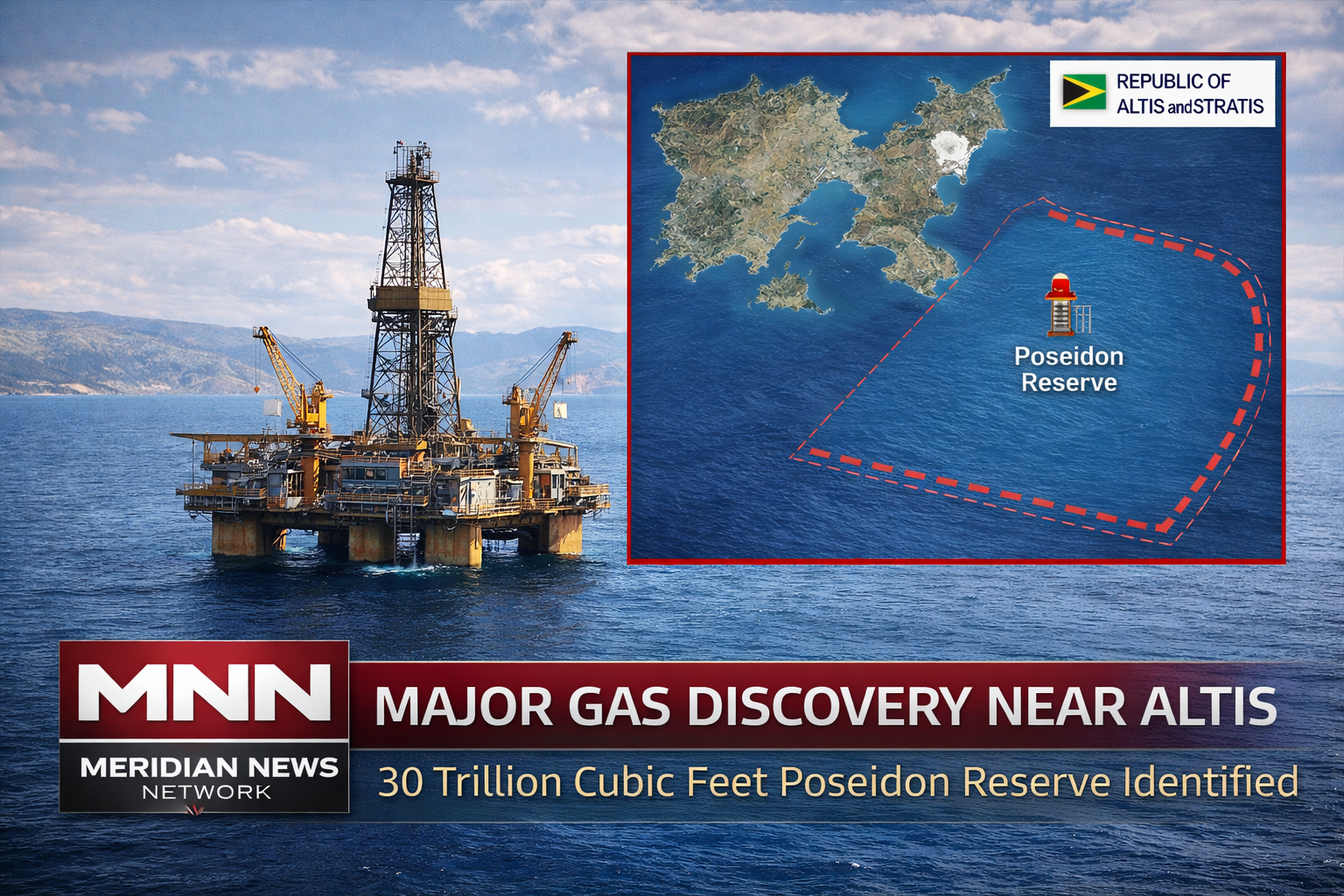
The discovery of the Poseidon Reserve positions Altis and Stratis as a major emerging energy player in the eastern Mediterranean.
Turkey Warns Altis Instability Puts Poseidon Reserve at Risk
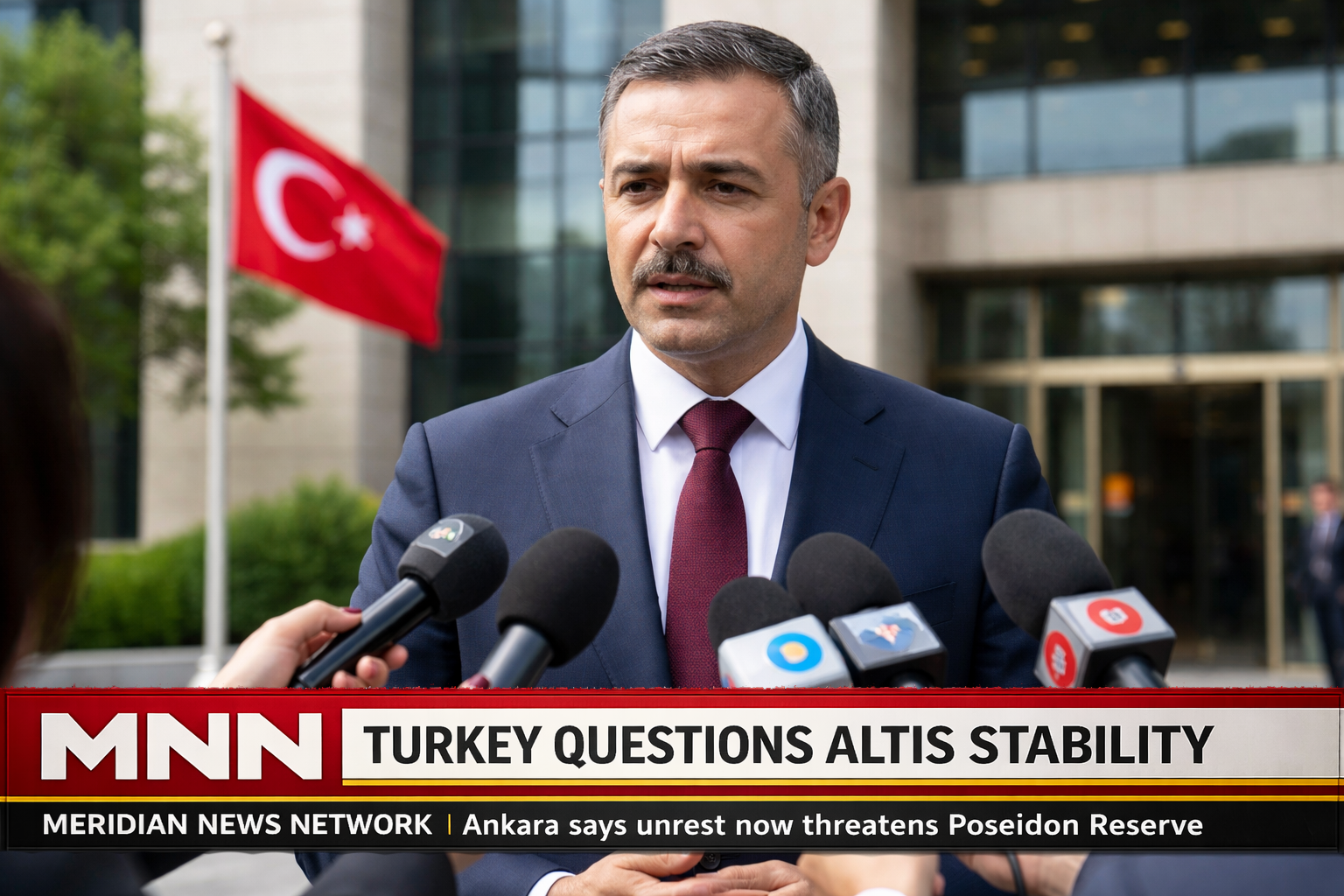
Turkish officials say worsening disorder on Altis now threatens regional energy security and the safety of critical infrastructure tied to the Poseidon Reserve.
Republic Denounces Turkish Presence at Molos Airfield
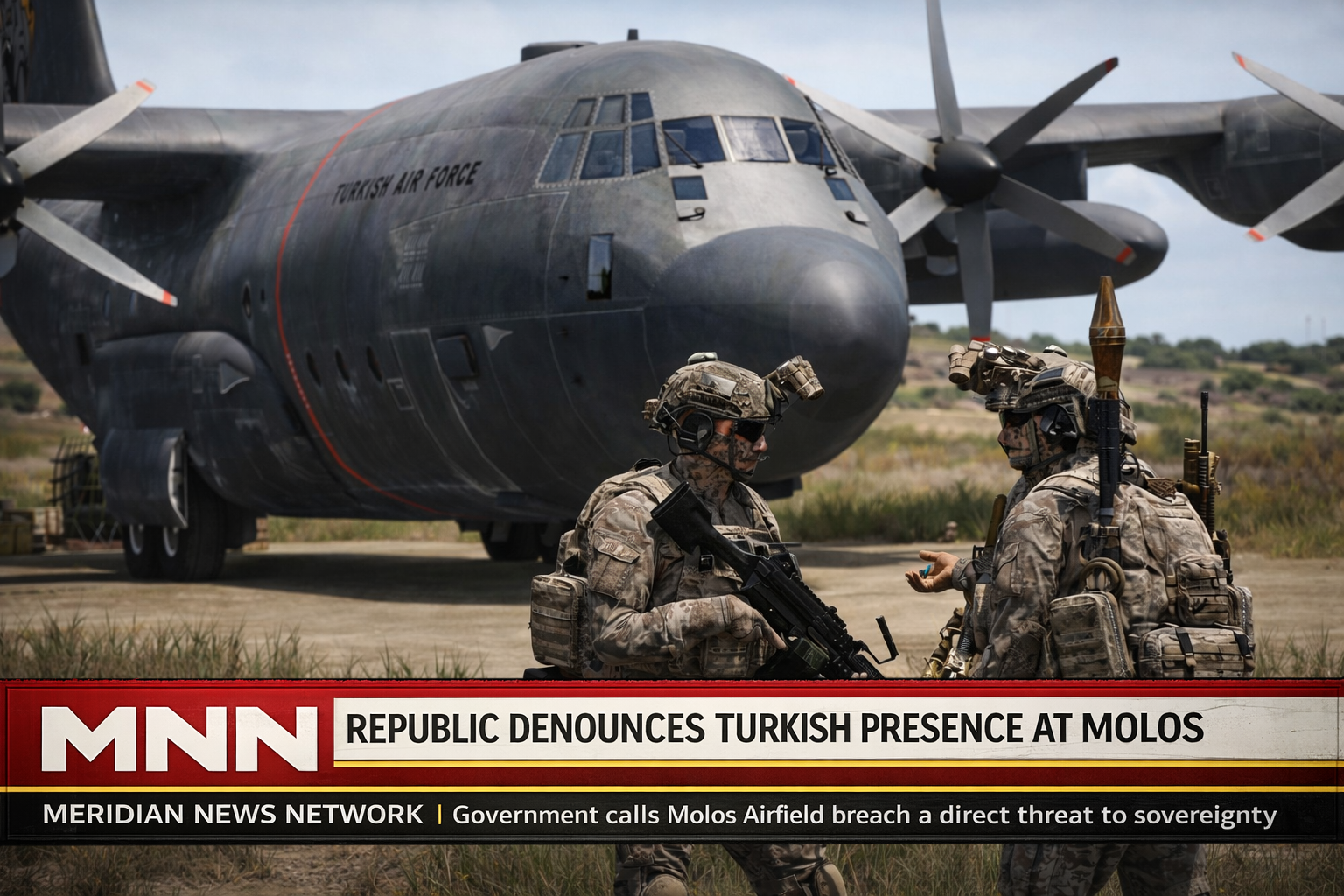
The government of Altis and Stratis says Turkish forces have established an unlawful position at Molos Airfield, marking the clearest rupture yet between covert pressure and open intervention.