

Field notes
Altian Opposition Networks
Decentralized anti-government groups active in Altis during the instability that preceded the Poseidon Crisis.
Overview
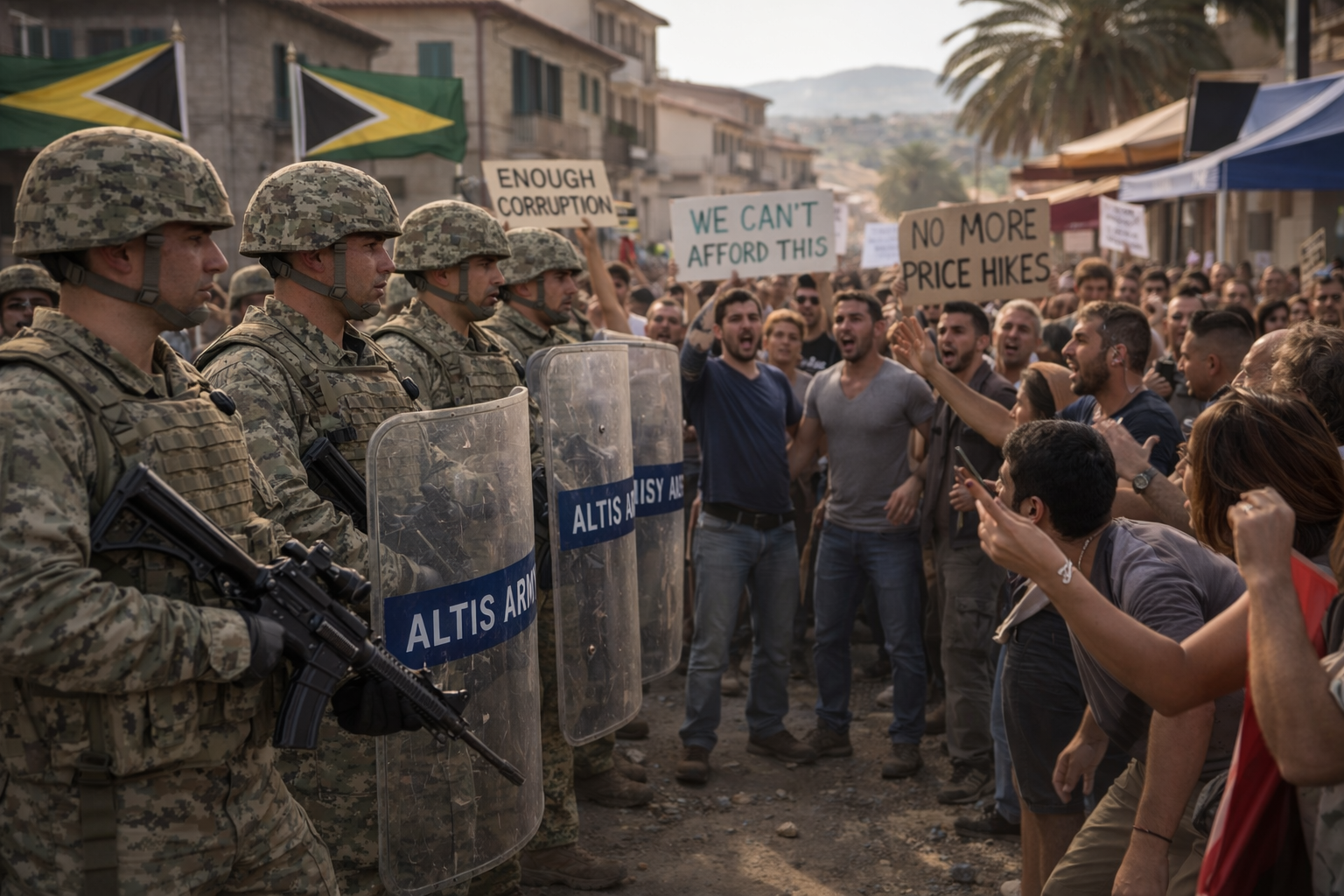
The Altian Opposition Networks were a loose collection of decentralized, informal groups that emerged across the Republic of Altis and Stratis during the early and mid-2020s. Formed in response to economic collapse, political instability, and declining trust in the civilian government, these networks represented the earliest stage of organized resistance on the islands.
Unlike later insurgent formations, the Opposition Networks lacked unified leadership, structure, and long-term strategic alignment. Instead, they operated as independent cells with varying motivations, capabilities, and objectives.
Background
The emergence of the Opposition Networks is closely tied to the Altian Economic Crisis, which severely destabilized the nation as it entered the 2020s. As economic conditions worsened, public trust in government institutions collapsed, civil unrest spread across major cities, security forces were increasingly deployed domestically, and political divisions intensified among the population. In that environment, small groups began to organize outside of formal political structures.
Structure
The Opposition Networks were not a single organization, but rather a collection of independent cells operating across Altis and Stratis. They lacked any centralized leadership or command structure, maintained only limited coordination between groups, and tended to define themselves through local or regional identities rather than a unified national platform. Communication moved through informal and covert channels, and while some groups were politically motivated, others were driven primarily by economic desperation or anti-government sentiment.
Composition
Members of the Opposition Networks were drawn from a wide cross-section of Altian society, including disaffected civilians affected by economic hardship, former military personnel and reservists, individuals with past involvement in political movements, and local community figures organizing informal resistance. While some members possessed military experience, most groups were only partially trained and lacked access to advanced equipment.
Capabilities
At this stage, the Opposition Networks were limited in both scale and effectiveness. Their activity centered on small-scale organization and recruitment, the distribution of resources and information, the coordination of localized protests and unrest, and the basic use of small arms in isolated incidents. They were not capable of sustained military operations and did not function as a conventional fighting force.
Foreign Influence
This section contains original narrative content for the War is Hell series.
Following the discovery of the Poseidon Reserve in 2024, external actors began to quietly influence select groups within the broader movement.
Through covert channels, funding, equipment, and limited guidance were provided to specific cells. This support was not uniform and did not extend to the networks as a whole, resulting in uneven capabilities and influence across different regions.
Much of this activity was indirect, often routed through intermediaries and figures operating under deniable cover. Individuals receiving this support were not always aware of its true origin, leading to fragmented and sometimes conflicting objectives among the networks.
Public Perception
Public opinion regarding the Opposition Networks was mixed. Some citizens viewed them as a necessary response to government failure, representatives of legitimate grievances, or early defenders of civilian interests. Others saw them as disorganized and unreliable, potentially destabilizing, and a risk to national cohesion. At this stage, the networks did not possess a unified identity or widespread recognition.
Transition Toward Armed Conflict
As instability continued, certain elements within the Opposition Networks began to shift toward more coordinated and militant activity.
Over time, increased organization, external influence, and escalating tensions with government forces contributed to the transformation of these decentralized groups into more structured resistance movements.
These developments marked the shift from scattered unrest to organized armed resistance and set the conditions for the opening phase of the Poseidon Crisis.
April 2025 Escalation
Events in early April 2025 showed that parts of the Opposition Networks had progressed further than many observers realized. The Destruction of the Northern Radar Installation demonstrated that at least some cells, including formations like Sigma Team, could now coordinate infiltration, conceal fighters inside a disguised vehicle, breach a controlled military approach, carry anti-armor weapons, plant demolition charges, and fight through a contested withdrawal.
This mattered because it marked a clear change in character. The Networks were still decentralized overall, but they could no longer be described only as protest-era groups with scattered access to small arms. Certain detachments had become capable of deliberate military action against state infrastructure, and that uneven growth in capability made the wider movement more dangerous and less predictable.
The radar strike also reinforced the extent to which external support was shaping outcomes inside the movement. Not every cell received the same help, and not every commander operated at the same level of discipline, but the gap between ordinary local militants and the better-prepared strike elements was becoming increasingly visible.
Follow-on AAF sweep operations in northwestern Altis strengthened that conclusion. Government patrols moving through the western highlands encountered opposition fighters using the terrain effectively, occupying concealed firing positions, employing heavy machine guns, staging close-range ambushes, and leaving explosive traps in apparently abandoned sites. These contacts suggested that some local cells were now capable not only of striking fixed targets, but also of contesting search-and-clear operations in broken rural ground.
That development was strategically important because it showed that militarization inside the Networks was not limited to a single raid profile. Even where organization remained uneven, the opposition was becoming more dangerous in ways that regular forces could not dismiss as isolated sabotage or spontaneous resistance.
By April 13, 2025, a further distinction became clear. Certain opposition elements were no longer simply benefiting from covert outside help while pursuing their own local objectives. They were being used inside a broader design linked directly to Turkish strategic aims on Altis. The Molos diversion carried out by Sigma Team is one of the clearest examples: a local opposition unit was used to fix police and AAF forces away from a separate objective tied to open Turkish military involvement.
This mattered because it revealed a widening gap inside the movement itself. The Opposition Networks remained decentralized overall, but some cells were now functioning as instruments of a larger foreign-backed escalation whose full goals were not necessarily known even to the fighters carrying out the tactical work.
The connection to the earlier Destruction of the Northern Radar Installation is part of what makes that pattern so important. If the radar strike helped create a temporary surveillance blind spot later exploited during the Molos operation, then some opposition actions in early April were not merely attacks on the state. They were shaping moves in a wider campaign that linked local insurgent activity to the operational needs of impending Turkish intervention.
By April 16, 2025, this relationship had become even more explicit. Opposition fighters near Sophia, including the surviving field core of Sigma Team, were being used not simply to distract or sabotage, but to directly reduce AAF artillery pressure that was slowing the Turkish advance. The ambush of an AAF convoy and the subsequent assault on a nearby gun position showed that select network elements were now contributing to battlefield conditions in support of Turkey’s movement on the ground.
This marks another change in the historical role of the Networks. They remained decentralized and uneven overall, but the best-armed and best-directed cells were no longer acting only as insurgents exploiting state weakness. They were becoming irregular auxiliaries inside a larger campaign whose operational priorities increasingly aligned with Turkish military needs.
Historical Role
In historical terms, the Altian Opposition Networks served as the decentralized precursor to the armed opposition active during the opening phase of the Poseidon Crisis. Their main area of activity was Altis and Stratis throughout the early and mid-2020s, when fragmented local resistance gradually evolved into a more dangerous and militarized threat.
Within the broader War is Hell interpretation of ArmA 3 lore, the Networks are best understood as an early pre-civil-war layer of opposition activity. They do not replace later insurgent or revolutionary formations in official canon, but instead help explain how conditions on the islands deteriorated before those later conflicts emerged.
External Links
Related reporting
Read the wider story around this reference page
These linked reports and operations connect this reference page to the campaign developments and episodes where the story moves.
Fresh Kavala Protests Signal Deepening Crisis on Altis
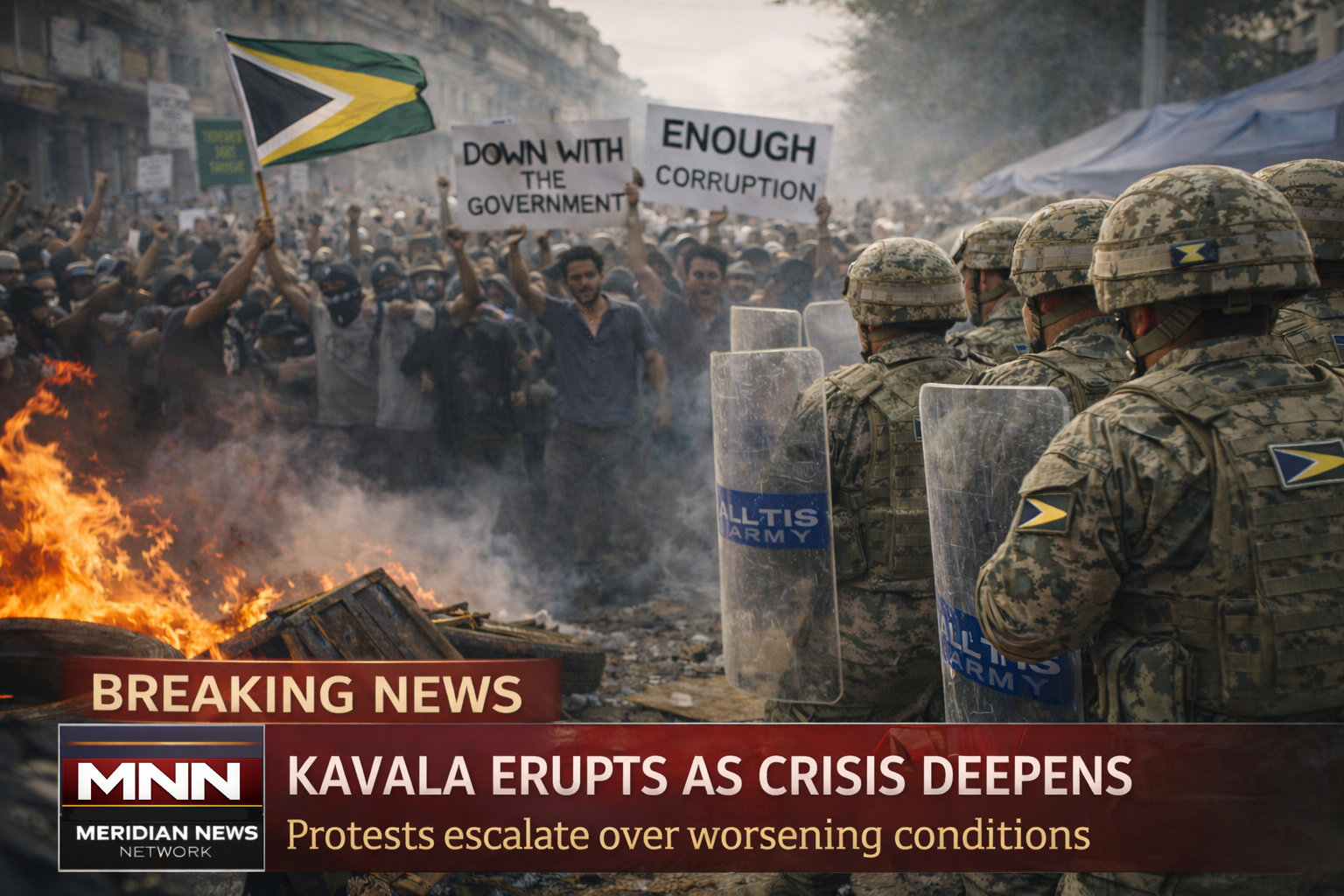
A new wave of demonstrations in Kavala underscores the continuing economic breakdown on Altis, with some marchers now appearing armed as local coverage intensifies.
Defense Ministry Signals Imminent Northwest Altis Operation
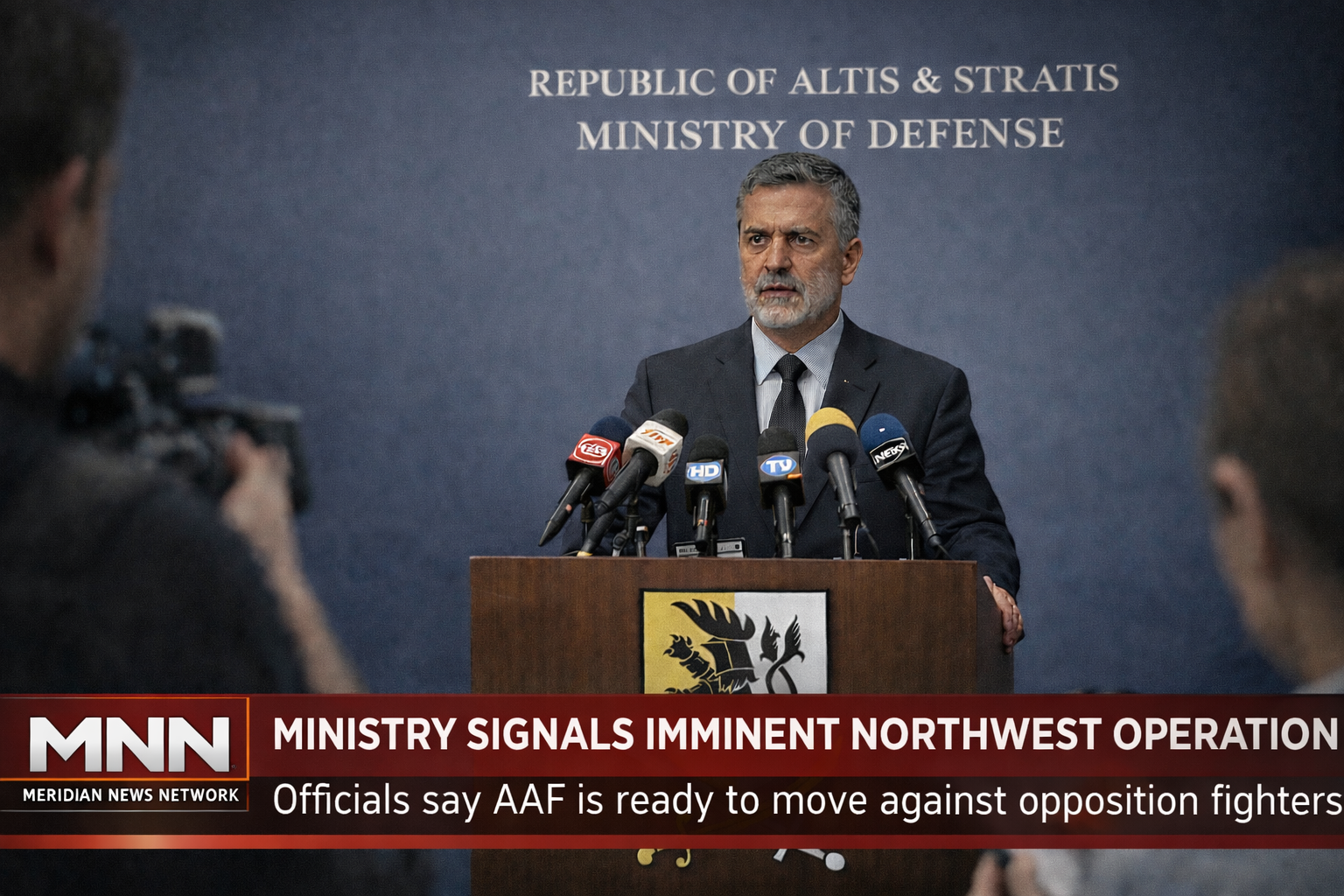
The Republic's Defense Ministry says AAF forces are preparing for operations in northwestern Altis after new intelligence reinforced concerns over armed opposition activity in the region.
War Breaks Out on Altis as Republic Forces Clash With Turkish Troops
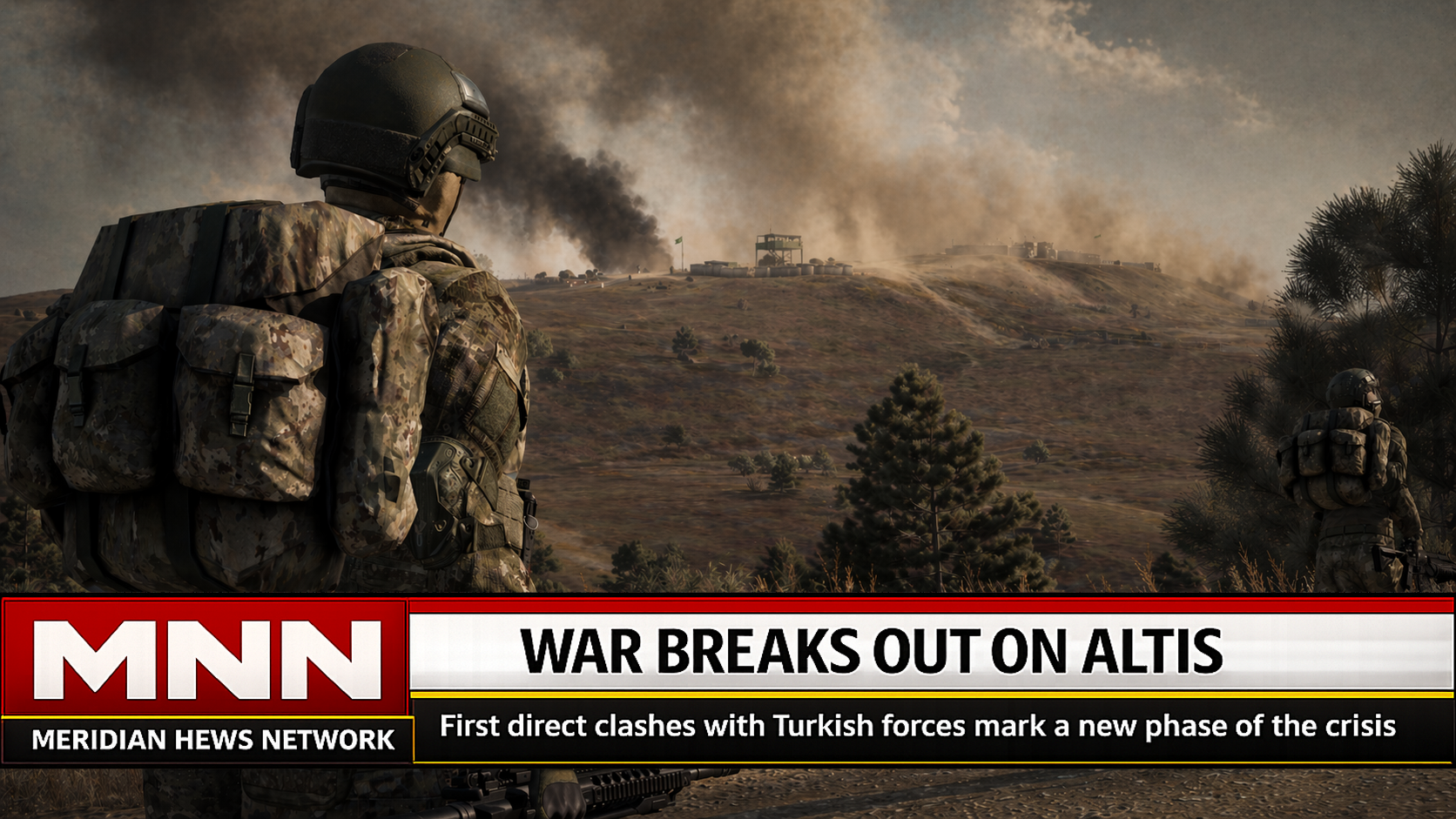
The first direct battles between Altian and Turkish forces have turned the Poseidon Crisis from open intervention into outright war on the island.