

Field notes
Northern Radar Installation
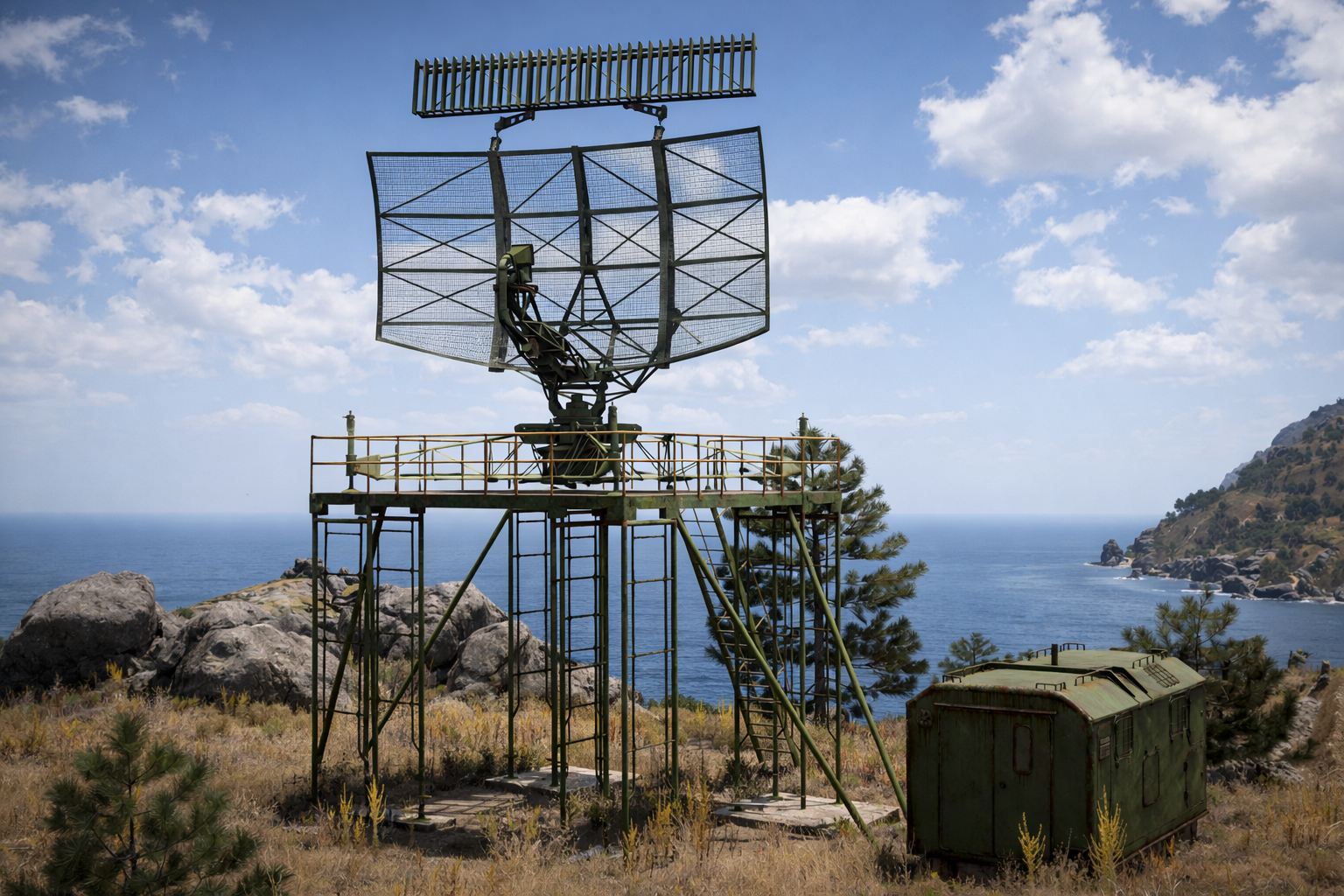
An AAF mobile radar position in northern Altis responsible for monitoring air and maritime approaches north of the island during the early Poseidon Crisis.
Overview
The Northern Radar Installation is an Altis Armed Forces mobile radar position located at map grid 022221 in the northern part of Altis. During the early phase of The Poseidon Crisis, it functions as one of the key surveillance sites responsible for monitoring the island’s northern airspace and the sea approaches beyond the coast.
Although commonly referred to as a fixed installation, the site is built around a mobile radar system supported by vehicles, communications equipment, field fortifications, and a local security detachment. Its position gives the AAF a valuable early-warning node overlooking the northern sector of the island.
Location
The site is positioned in elevated terrain in northern Altis near grid 022221, allowing radar operators to scan both inland approaches and the open water to the north. From this area, the installation can observe movement across a broad section of the island’s northern corridor while also extending surveillance outward into the surrounding sea lanes.
Its placement is tactically useful for two reasons. First, higher ground improves line-of-sight performance for radar and communications equipment. Second, the northern coast is one of the most sensitive approach zones on Altis for any aircraft, helicopter, or small maritime movement attempting to approach the island from offshore.
Role in AAF Defense
Within the AAF’s defensive network, the Northern Radar Installation serves as a local early-warning and tracking asset. A mobile radar of this type would typically help operators detect and report low- to medium-altitude aircraft movement, monitor helicopter traffic, and contribute to wider situational awareness for nearby military formations and regional command elements.
In practical terms, the site helps the AAF maintain a recognized picture of activity in the northern sector. That includes warning of unidentified aircraft, flagging unusual patterns of movement near the coast, and supporting the coordination of response forces if a threat begins to develop.
Because the radar also looks north over the water, its importance extends beyond purely inland security. The installation contributes to monitoring maritime approaches, especially the sea space most relevant to northern Altis. While it is not a dedicated naval base sensor, its position makes it useful for identifying suspicious approach patterns, low-flying helicopters coming in over the coast, or support activity tied to offshore movement.
Mobile Radar Function
The system at the site is described as a mobile radar rather than a permanent hardened station. In military terms, that usually means the core sensor is mounted on a vehicle or deployable platform and can be repositioned if operational conditions require it.
This gives the AAF some flexibility. Mobile radar systems are valuable because they can be dispersed, concealed, and reoriented more easily than fully permanent installations. They are also useful in unstable conditions where commanders may need to extend surveillance coverage quickly or sustain operations without relying on a major fixed base.
At the same time, a mobile radar site still depends on support personnel, communications links, electrical power, security forces, and reliable road access. Even when the sensor itself is movable, the broader operating position remains an important and vulnerable military node.
Strategic Importance
The Northern Radar Installation is significant because it supports awareness, reaction time, and territorial control in a period when the Republic of Altis and Stratis is already under severe strain. As unrest spreads and armed opposition activity becomes more organized, installations like this help the state preserve visibility over key sectors it can no longer take for granted.
In the wider strategic environment of the Poseidon Crisis, northern surveillance matters because Altis is no longer dealing only with internal disorder. The island is also part of a contested regional space shaped by foreign pressure, covert movement, and the growing importance of infrastructure tied to national defense. A radar site covering the north coast and nearby sea approaches therefore carries importance beyond its small footprint on the map.
April 2025 Attack and Destruction
On April 6, 2025, the Northern Radar Installation was struck by an opposition raid that is now widely regarded as one of the first major overt attacks of the Poseidon Crisis. The event is covered separately in Destruction of the Northern Radar Installation, while the state’s immediate public response appears in MNN reporting on the radar strike investigation. The assault force, linked to the Altian Opposition Networks, approached the site using a stolen AAN press van connected to the killing of a news crew in Kavala the night before.
According to later reconstruction, the attackers exploited a pre-cleared media visit to get through the outer checkpoint and move into position before the deception collapsed. Once challenged for press credentials near the site, the strike team initiated the assault, destroyed security personnel and vehicles near the approach, pushed uphill, and planted demolition charges on the radar position itself.
The attack was tactically significant for several reasons. It combined deception, prior coordination, anti-armor capability, and a planned demolition of critical military equipment. It also demonstrated that at least some opposition cells were no longer acting as loosely armed local militants, but as formations capable of carrying out a prepared strike against state infrastructure.
The destruction of the site degraded AAF surveillance in northern Altis and carried political weight beyond its immediate military damage. What might once have been treated as unrest or isolated sabotage was now harder to separate from an emerging insurgent campaign. For AAF commander Colonel Konstantinos Drakos, the loss underscored how quickly the republic was being pushed into a conflict for which ordinary internal security measures were no longer enough. In later histories of the crisis, the fall of the Northern Radar Installation is often identified as the point when the island’s instability became unmistakably armed escalation.
Related reporting
Read the wider story around this reference page
These linked reports and operations connect this reference page to the campaign developments and episodes where the story moves.
Republic Launches Investigation After Northern Radar Installation Destroyed
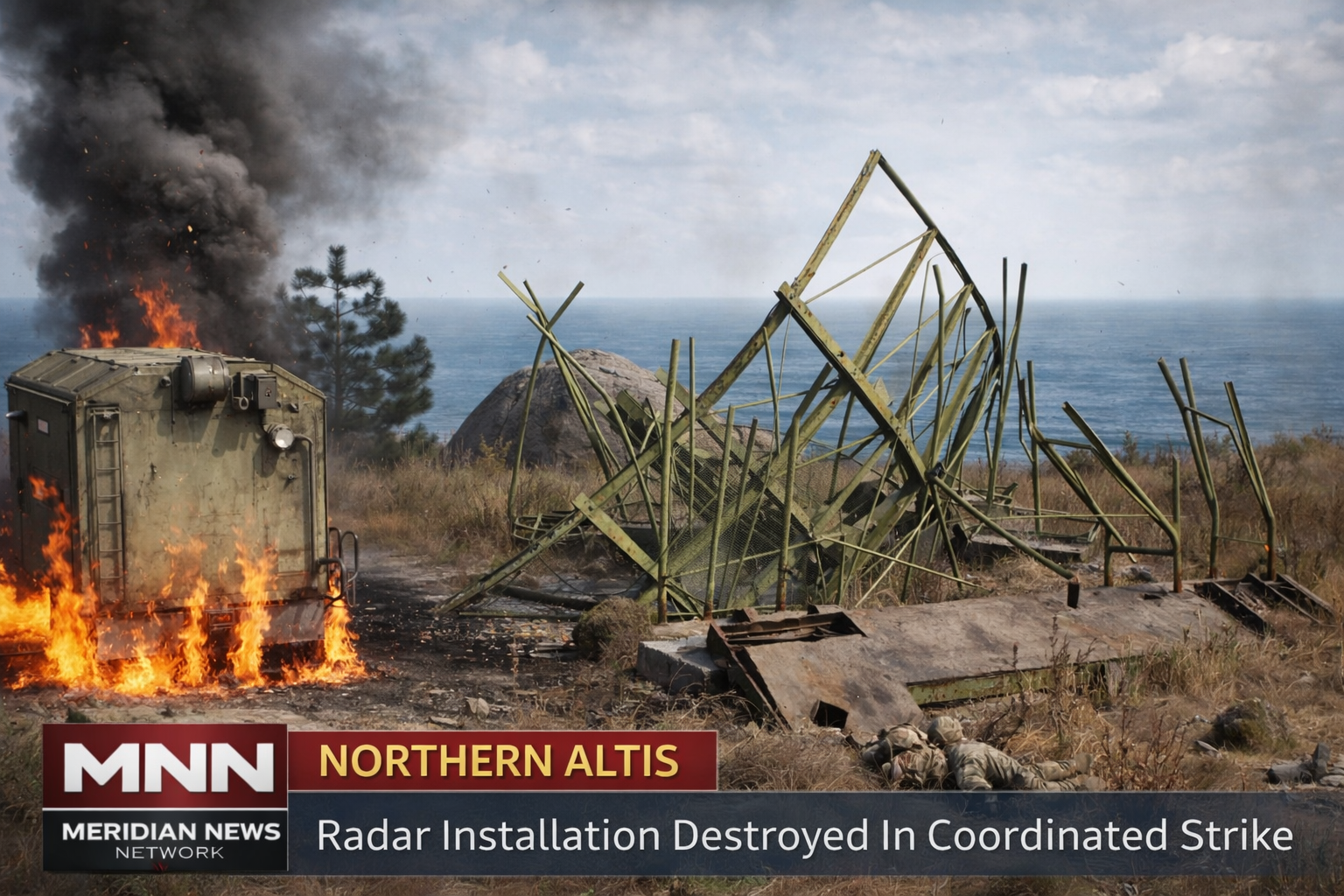
The destruction of the Northern Radar Installation has prompted a widening investigation on Altis, with officials examining possible links to the killing of an AAN news crew in Kavala hours earlier.
AAN News Crew Killed in Kavala as Van and Equipment Vanish
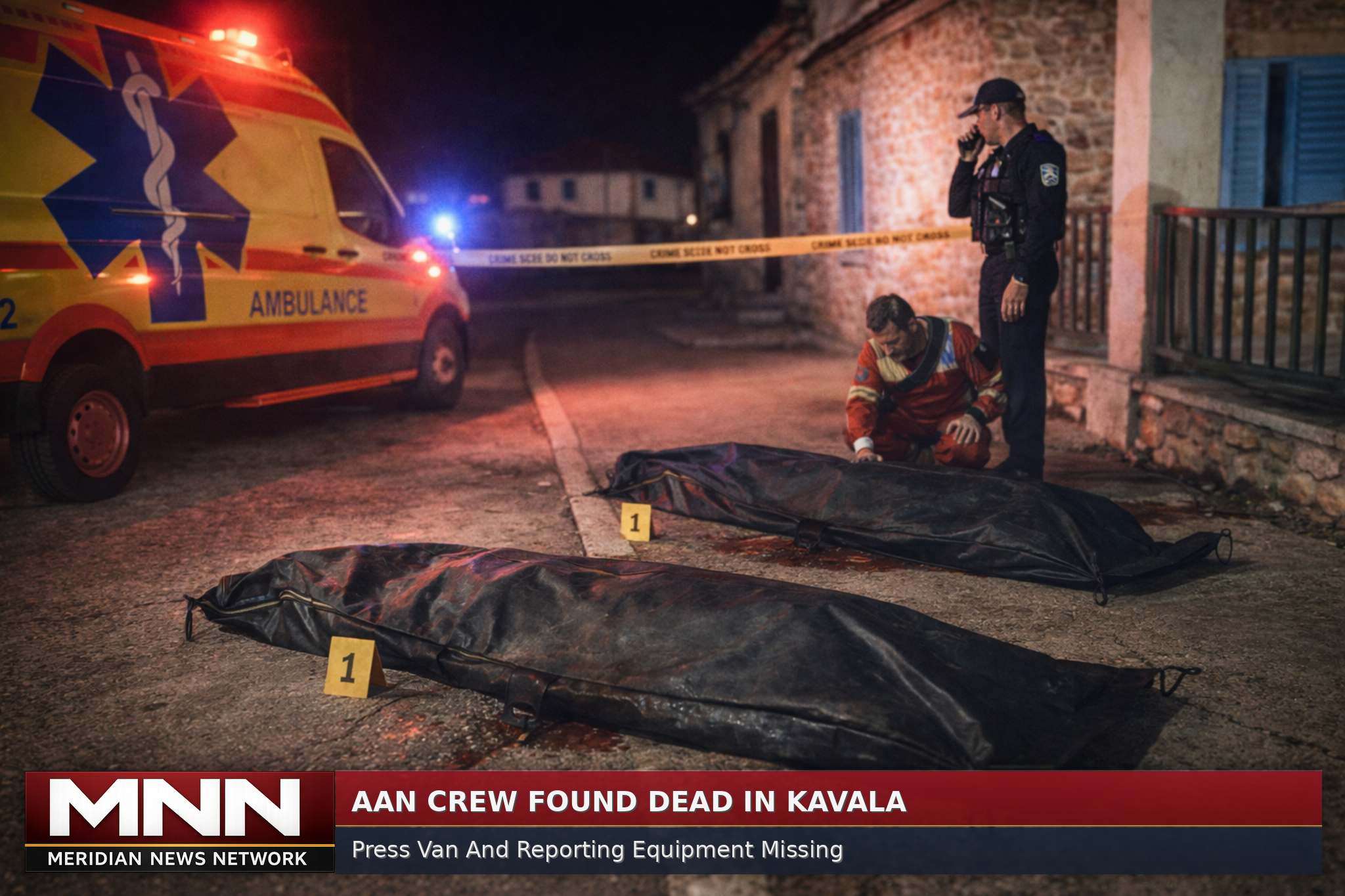
An Altis Action Network crew was found murdered in Kavala on April 5, 2025, with their van and reporting equipment missing and no immediate leads for investigators.
Fresh Kavala Protests Signal Deepening Crisis on Altis
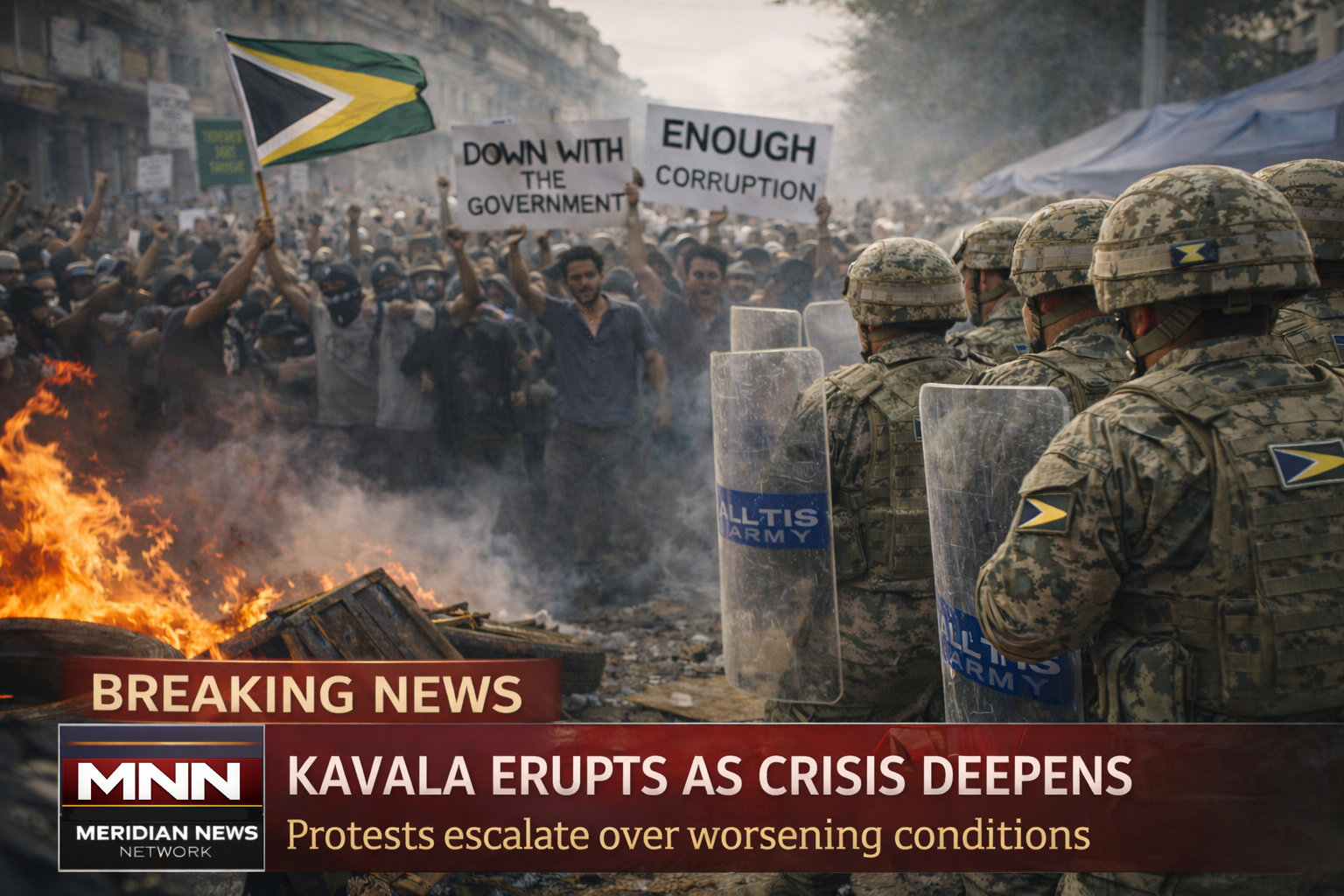
A new wave of demonstrations in Kavala underscores the continuing economic breakdown on Altis, with some marchers now appearing armed as local coverage intensifies.