


Field notes
Turkish Breakthrough South of Sofia Forces AAF Fallback
Turkish forces have broken through AAF lines south of Sofia after sustained pressure on the Molos corridor, forcing Altian units into a more urgent fallback and widening concern that the foothold has become a true inland advance.
Turkish Breakthrough South of Sofia Forces AAF Fallback
Meridian News Network (MNN)
April 17, 2025
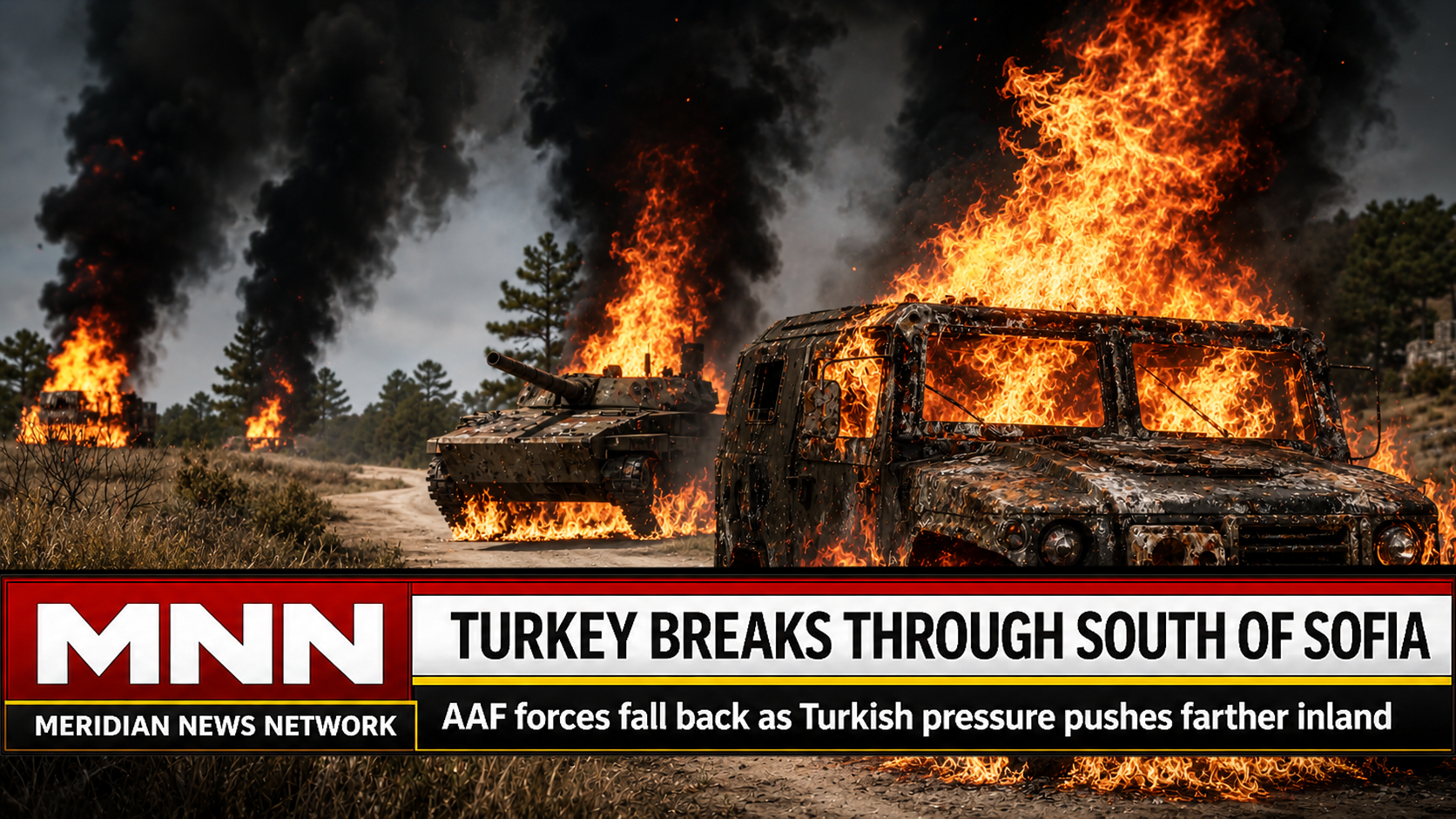
PYRGOS, ALTIS - Turkish forces have reportedly broken through sections of the Altis Armed Forces defensive line south of Sofia, forcing local Altian units into fallback movement and marking the clearest sign yet that Ankara’s foothold around Molos Airfield has begun turning into a more dangerous inland advance.
Altian authorities have not released a full public battlefield map, and independent verification from the front remains limited. Even so, officials, local security sources, and observers familiar with the military situation say the line that had been slowing Turkish movement for the past two days no longer appears intact in its previous form.
That change matters because the fighting around Sofia had represented one of the strongest immediate checks on Turkish momentum after the opening shock of the landing. If that barrier is now giving way, the war on Altis may be entering a more fluid and more dangerous phase.
Pressure Around the Molos Corridor Finally Tells
Until now, the Turkish advance beyond Molos had been constrained by a narrow entry route, heavier-than-expected early losses, and persistent AAF artillery pressure.
That pressure appears to have eased enough for Turkish forces to regain momentum.
Military-linked sources say the fighting over the last twenty-four hours has been shaped not by a single dramatic armored lunge, but by cumulative pressure: repeated probing, attritional fire, and the gradual weakening of the positions the Republic had been using to keep the Molos corridor compressed. In that sense, the current breakthrough is being read less as a sudden surprise than as the moment a strained defense finally stopped holding.
Local Fallback, Not Yet Full Collapse
Officials in Pyrgos are unlikely to admit to a rout, and at least for now there is little evidence that the entire local front has dissolved.
Instead, the picture emerging from the area suggests something more dangerous and more believable: organized fallback under pressure. Altian units appear to be giving ground in order to avoid being cut off entirely while trying to preserve enough cohesion to establish new blocking positions farther back.
That distinction matters. A controlled withdrawal is not the same thing as immediate battlefield collapse. But it does mean the Republic is now fighting to restore a line it was previously still managing to hold.
The Breakthrough Cannot Be Separated From the Artillery Fight
Several analysts say the change on the ground cannot be understood without looking at the artillery battle that had been helping hold Turkish movement in check.
For days, AAF guns had reportedly imposed enough friction on the approaches south of Sofia to slow Turkish movement and complicate reinforcement from Molos. Now that pressure appears to have weakened. Whether through battlefield attrition, successful strikes on supporting positions, or the cumulative effect of convoy losses and local disruption, the Turkish side seems to have gained the room it needed to push harder than it could earlier in the week.
That does not mean the Turkish advance has become easy or uncontested. It does mean one of the Republic’s most useful immediate advantages now appears less reliable than it was.
Why This Changes the Military Picture
The breakthrough matters not only because Turkish troops have moved farther inland, but because it may force the AAF to make harder choices faster.
The Republic has already lost Colonel Konstantinos Drakos, has already been pushed into open war before fully stabilizing its internal security picture, and is already trying to hold together under command strain. If Turkish forces can now convert their foothold into sustained movement beyond Sofia, the AAF may be compelled to trade space for time on worse terms than it had hoped.
That in turn raises the stakes for every fallback route, every convoy movement, and every attempt to preserve command continuity while the line is shifting.
The Republic’s Window Narrows
For now, Turkish forces are still operating off a position that depends heavily on the Molos entry corridor, and analysts caution against treating the breakthrough as proof that Ankara now has unrestricted freedom of movement across Altis.
Even so, the immediate question has changed.
The issue is no longer only whether Turkey can break out from Molos. It is whether the Republic can rebuild a defensible line quickly enough to prevent that breakout from widening into a more general retreat.
If the answer is no, the war may soon look less like a contained fight around an airfield and more like the beginning of a broader campaign across central Altis.
Related coverage
Follow the wider story
Move from the report to the linked operation and adjacent reporting to keep the Poseidon Crisis thread connected.
Turkey's Advance Past Sofia Moves More Slowly Than Expected
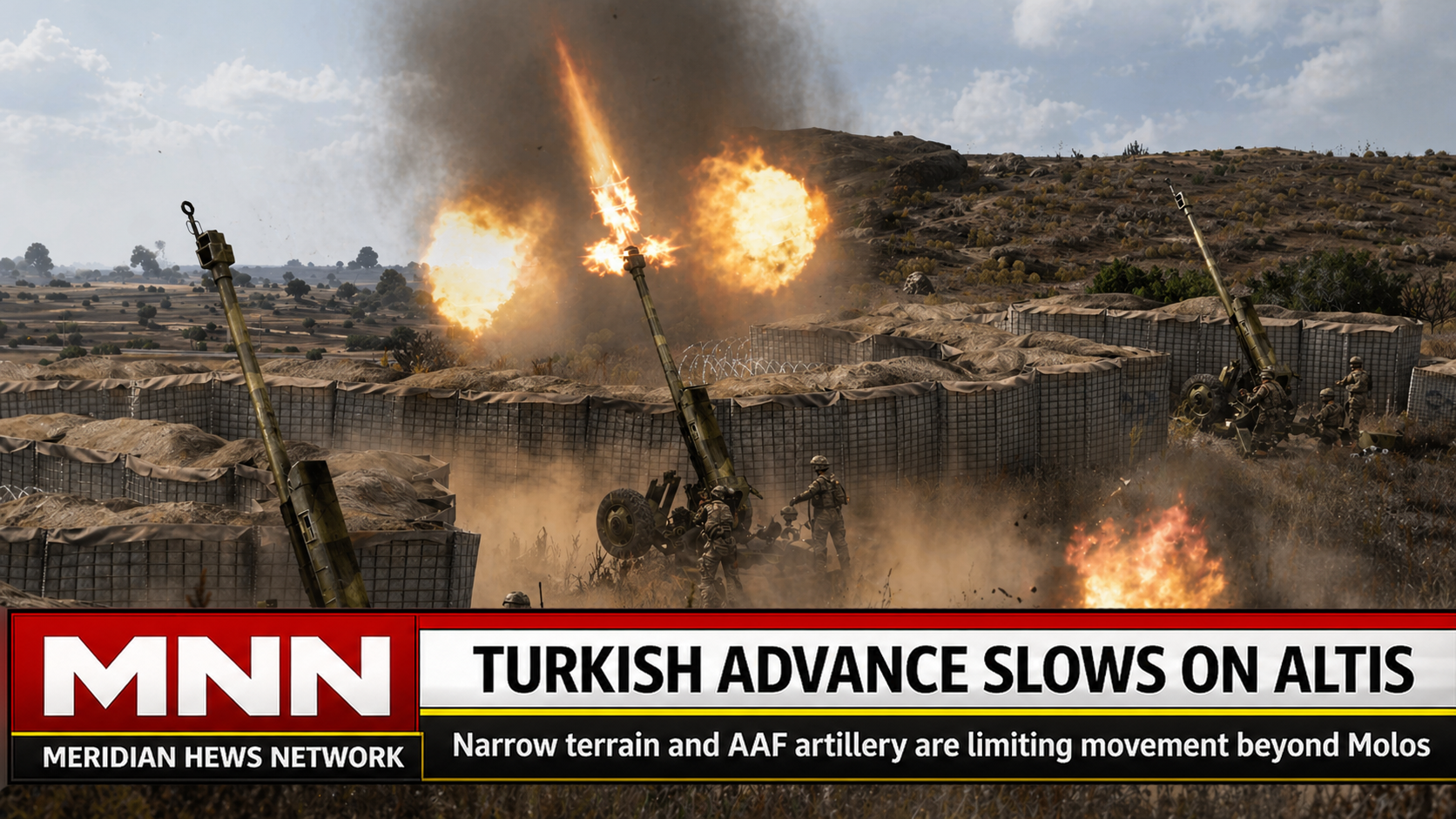
Turkish forces have struggled to build momentum past Sofia as AAF artillery, narrow terrain, and heavier-than-expected early losses slow the opening phase of the advance.
Flights Continue Into Molos as Turkish Position Grows
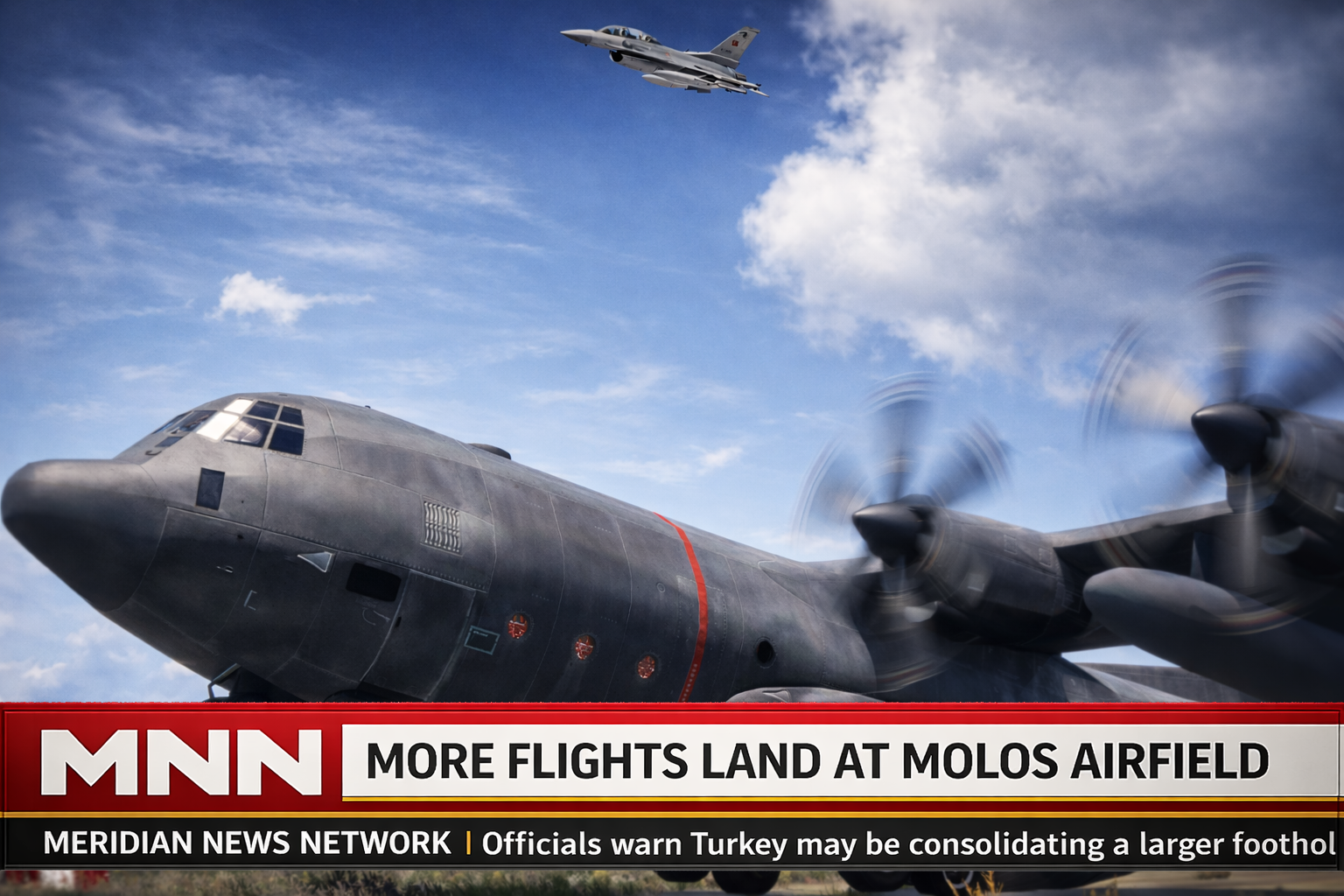
Repeated transport flights into Molos Airfield are fueling fears that Turkey is reinforcing for a larger operation rather than holding a limited position.
Republic Denounces Turkish Presence at Molos Airfield
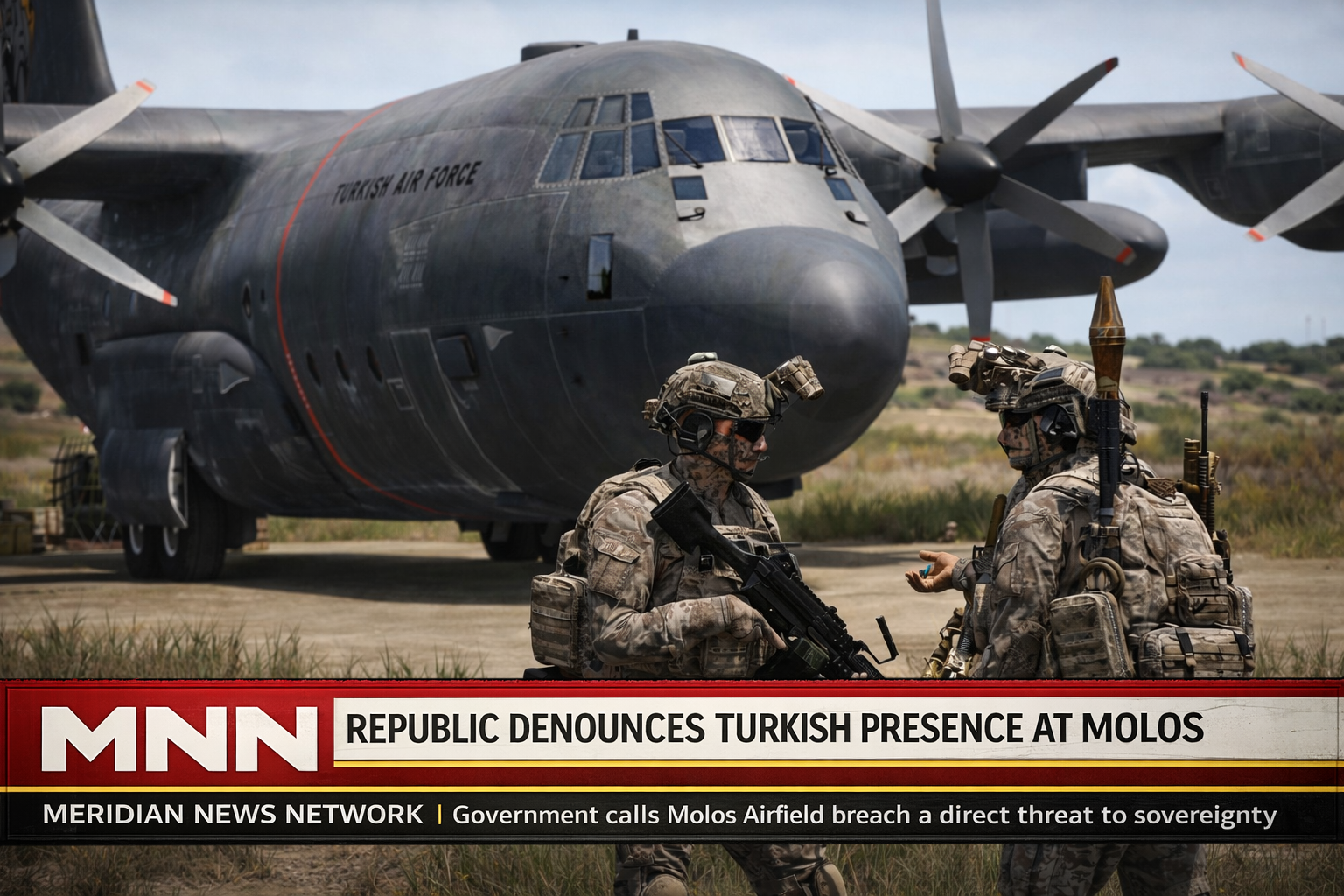
The government of Altis and Stratis says Turkish forces have established an unlawful position at Molos Airfield, marking the clearest rupture yet between covert pressure and open intervention.