

Field notes
War Breaks Out on Altis as Republic Forces Clash With Turkish Troops
The first direct battles between Altian and Turkish forces have turned the Poseidon Crisis from open intervention into outright war on the island.
War Breaks Out on Altis as Republic Forces Clash With Turkish Troops
Meridian News Network (MNN)
April 15, 2025
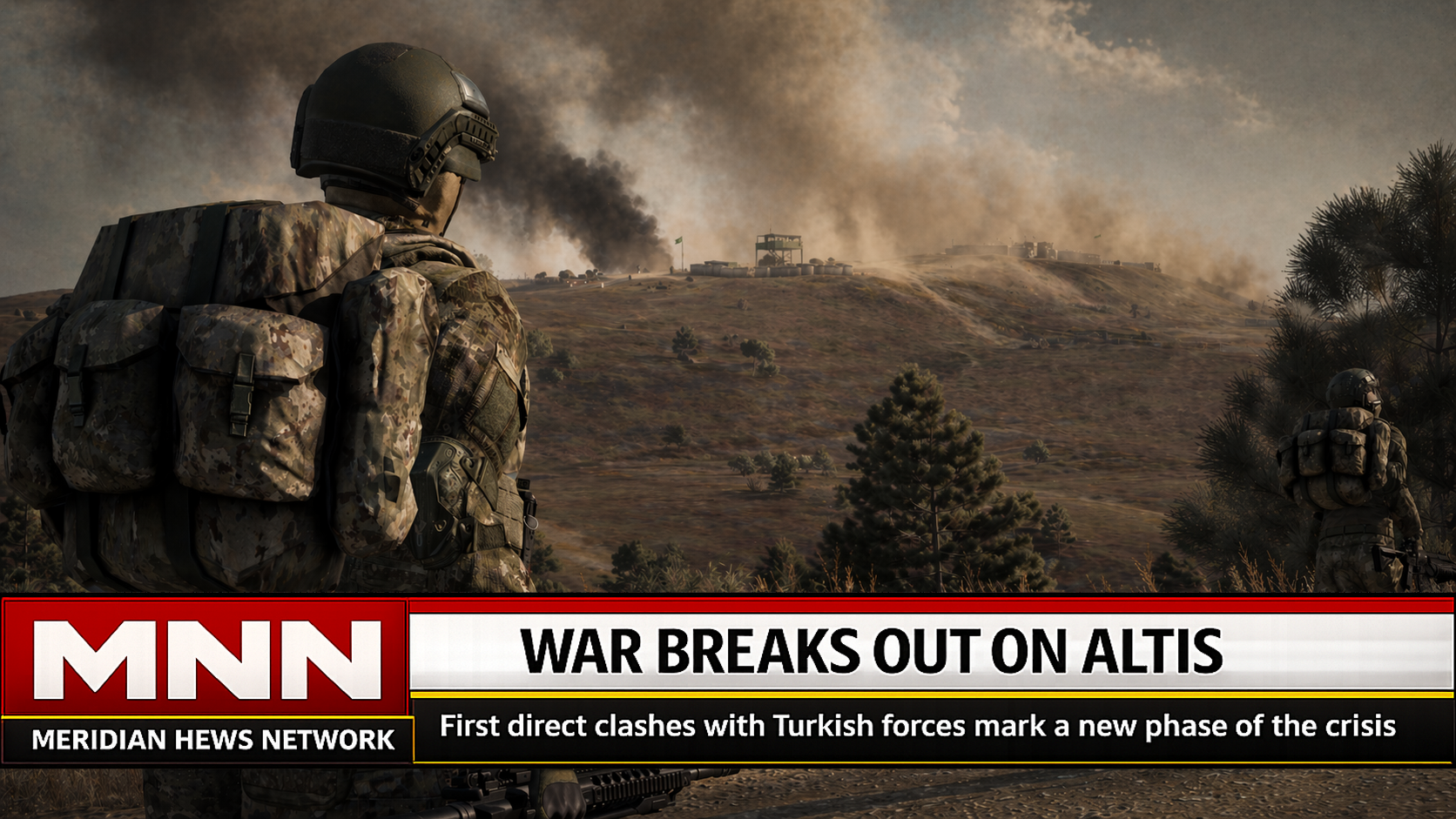
PYRGOS, ALTIS - The Poseidon Crisis has crossed into open war after the first direct battles between the Republic of Altis and Stratis and Turkish forces erupted south of Molos Airfield, ending any remaining ambiguity over whether Ankara’s military presence on the island was limited, temporary, or defensive.
Altian authorities say government troops were drawn into sustained combat after a last attempt at military contact collapsed and Turkish units pushed beyond the confines of the airfield zone into a wider battlefield. The fighting marks the clearest break yet from the phase of covert influence, insurgent escalation, and disputed intervention that had defined the crisis in earlier weeks.
Officials have not yet released a complete casualty count, and the operational picture remains incomplete. Even so, the political meaning of the moment is already clear. The Republic is no longer confronting only internal armed opposition and foreign pressure operating through proxies. It is now in direct combat with the forces of a neighboring state on its own soil.
The Line Finally Breaks
For days, the Republic had warned that the Turkish seizure and reinforcement of Molos Airfield could not be treated as a narrow security action.
Repeated airlift activity, expanding positions near the airfield, and the increasingly aggressive tone of Turkish public statements had already led many officials to conclude that the situation was moving toward a wider clash. What was still missing was the final point of confirmation: direct and sustained fighting between organized units of the Republic and the Turkish military.
That confirmation has now arrived.
Defense-linked sources say the first major engagements began after an attempted contact between senior commanders failed under violent circumstances, forcing nearby AAF units into an emergency defensive response. What followed, according to military observers, was not a local misunderstanding or an exchange between irregular elements. It was the opening of open interstate warfare on Altis.
Drakos Killing Deepens the Shock
The sense that a point of no return has been crossed was sharpened further by the reported death of Colonel Konstantinos Drakos, one of the Republic’s most respected field commanders and a central figure in the government’s military response to the crisis.
Officials have not yet published a full formal account of the circumstances surrounding his death. However, multiple sources familiar with the developing picture say Drakos was killed after a meeting intended to clarify Turkish intentions collapsed, leaving AAF personnel to withdraw under fire and organize a hurried defense.
That account, if confirmed, is likely to have effects well beyond the battlefield. Drakos was not only a senior officer. He had come to represent the idea that the Republic could still contain the crisis through discipline, legitimacy, and controlled force even as pressure mounted across the island. His loss is therefore being read not just as a battlefield casualty, but as a major symbolic blow at the very moment the war has entered its most dangerous phase yet.
From Airfield Crisis to Southern Front
The significance of the current fighting lies partly in geography.
Until now, the central question was whether Turkey intended merely to establish a protected foothold at Molos or use that foothold to support wider operations inland. The outbreak of direct clashes appears to answer that question in the harshest possible way. Analysts now say the airfield can no longer be understood as an isolated breach. It has become the anchor point for a broader military confrontation in southern Altis.
That shift matters because it changes how every earlier stage of the crisis is likely to be interpreted. The destruction of the Northern Radar Installation, the AAF sweeps in northwestern Altis, the Turkish foothold at Molos, and the continued reinforcement flights into the airfield now look less like separate shocks and more like successive stages in the approach to open war.
A Republic Under Immediate Pressure
The Republic now faces a crisis on two levels at once.
Militarily, commanders must determine whether the current clashes represent a limited southern offensive, a probing action designed to widen Turkish control around Molos, or the beginning of a much larger campaign. Politically, the government must convince both its own population and outside observers that it still retains enough cohesion to organize a defense under direct external attack.
That will not be easy. The state entered this phase already strained by insurgent violence, institutional fatigue, and growing uncertainty over the security consequences of the Poseidon Reserve. Open war raises all of those pressures at once while narrowing the time available for any coherent response.
No More Ambiguity
The most important change may be the simplest one.
There is no longer a credible middle description for what is happening on Altis. The language of instability, intervention, and disputed presence has now been overtaken by the language of war. The Republic’s soldiers are fighting Turkish troops. Its command structure has suffered a major shock. Its southern approaches are under direct pressure. And the political struggle over whether Ankara intended to alter the island’s future by force has, in practical terms, already been answered.
What happens next will determine whether this remains a concentrated southern war around Molos or expands into something much larger.
But for Altis, one threshold has already been crossed. The crisis is no longer becoming a war.
It is one.
Related coverage
Follow the wider story
Move from the report to the linked operation and adjacent reporting to keep the Poseidon Crisis thread connected.
Flights Continue Into Molos as Turkish Position Grows
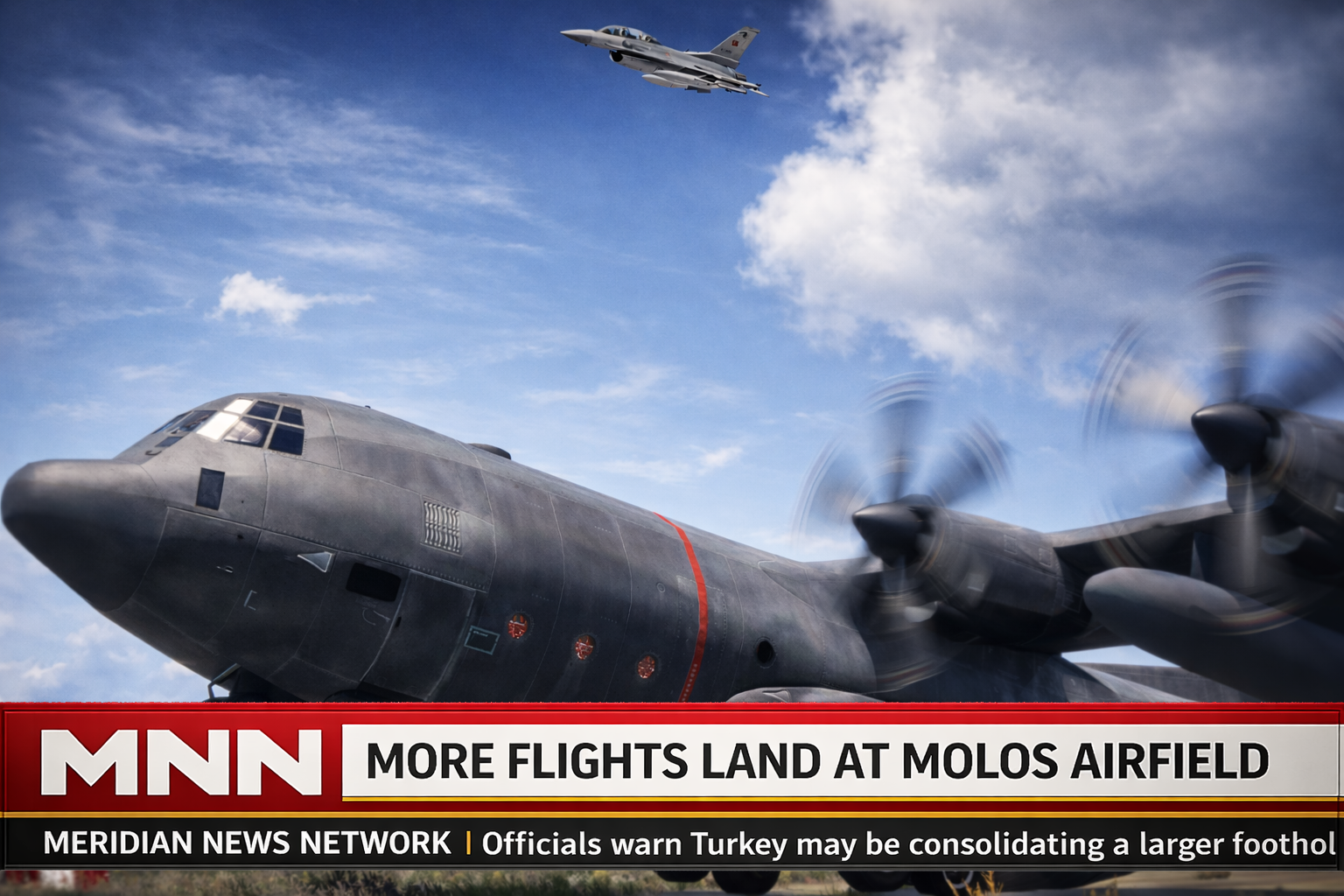
Repeated transport flights into Molos Airfield are fueling fears that Turkey is reinforcing for a larger operation rather than holding a limited position.
Republic Denounces Turkish Presence at Molos Airfield
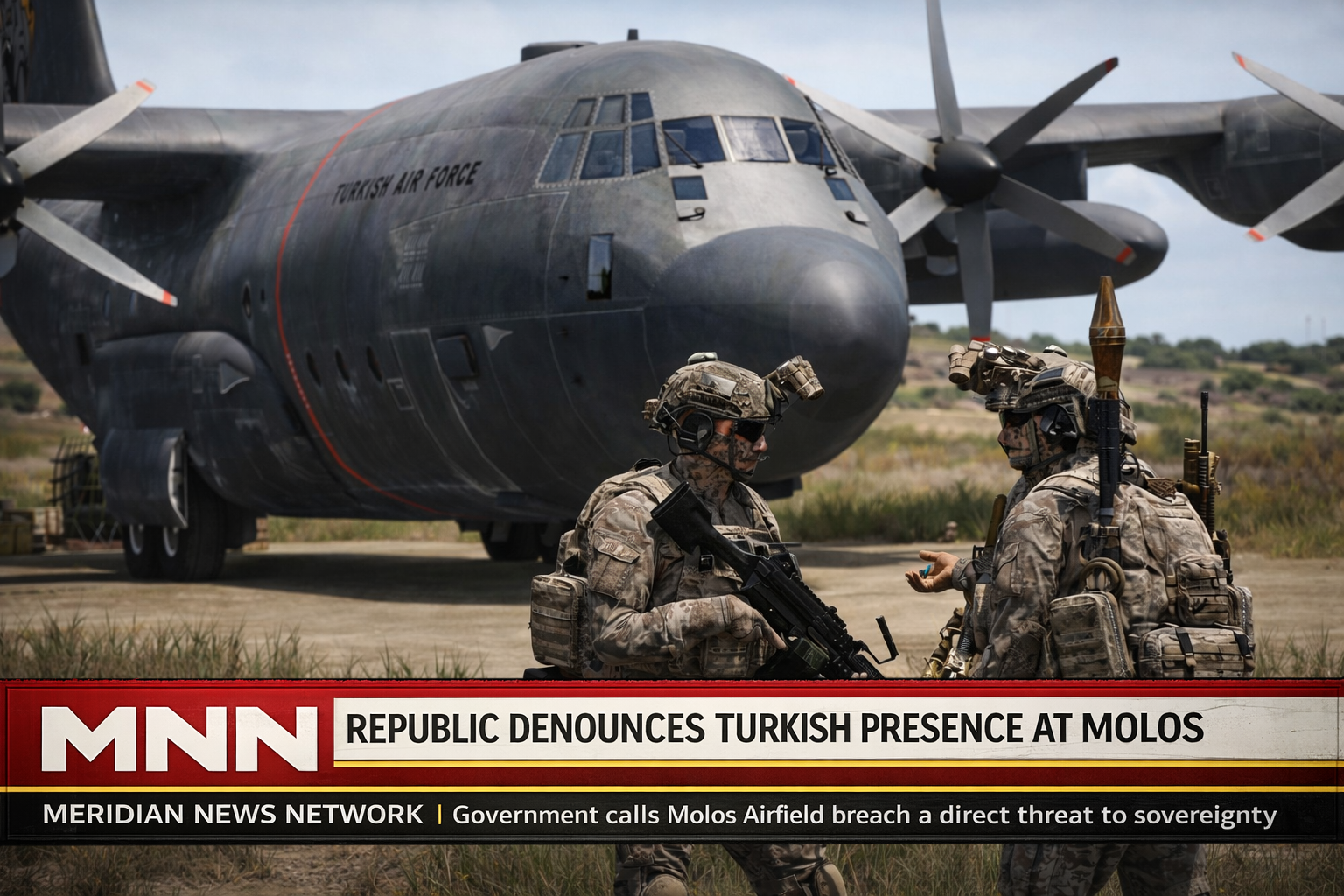
The government of Altis and Stratis says Turkish forces have established an unlawful position at Molos Airfield, marking the clearest rupture yet between covert pressure and open intervention.
Turkey Warns Altis Instability Puts Poseidon Reserve at Risk
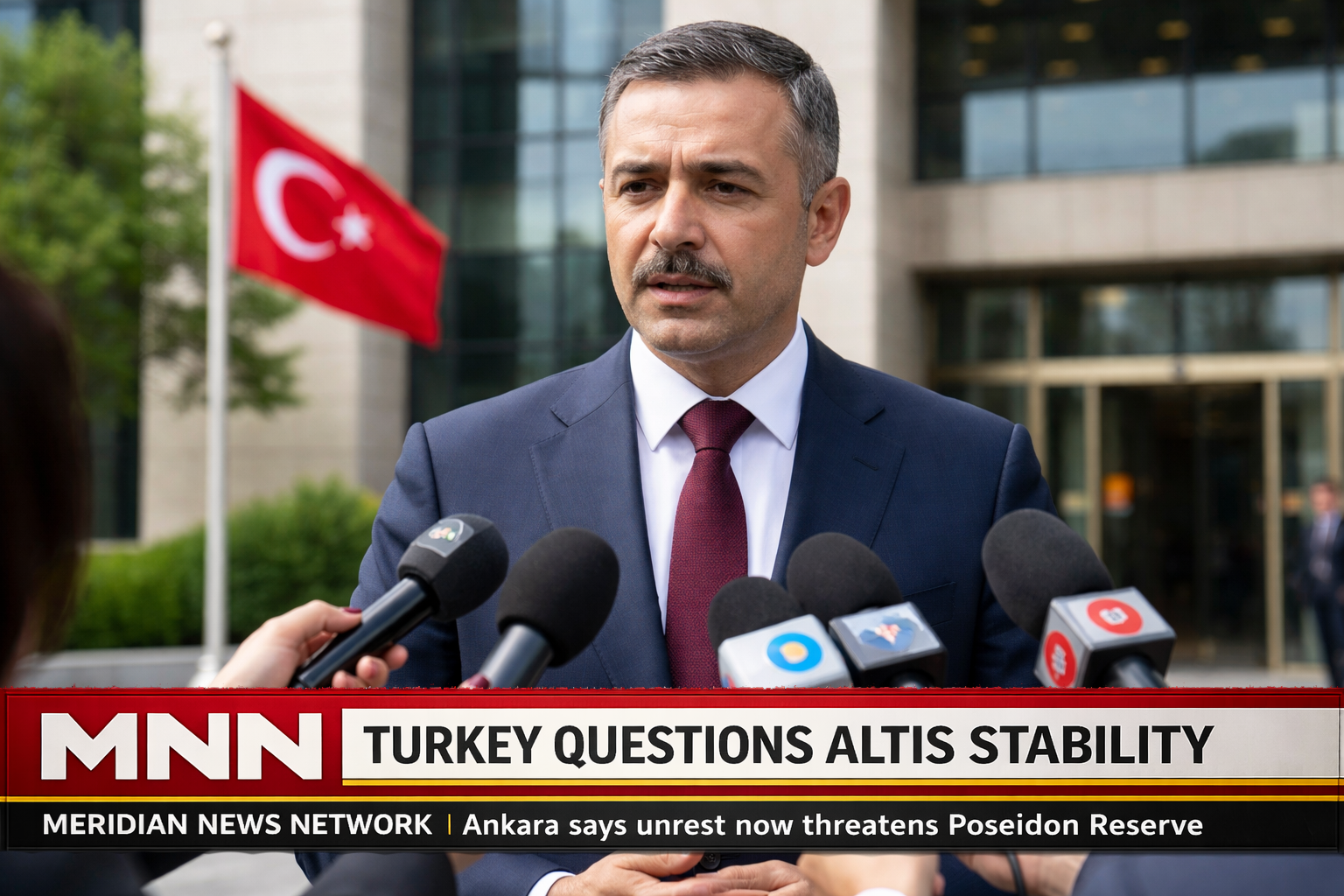
Turkish officials say worsening disorder on Altis now threatens regional energy security and the safety of critical infrastructure tied to the Poseidon Reserve.