


Field notes
Greece Urges NATO and UN to Act Over Turkish Aggression on Altis
Greece has taken the Turkish invasion of Altis before NATO and the United Nations, calling it a violation of international law and pressing for coordinated diplomatic and political consequences.
Greece Urges NATO and UN to Act Over Turkish Aggression on Altis
Meridian News Network (MNN)
April 17, 2025
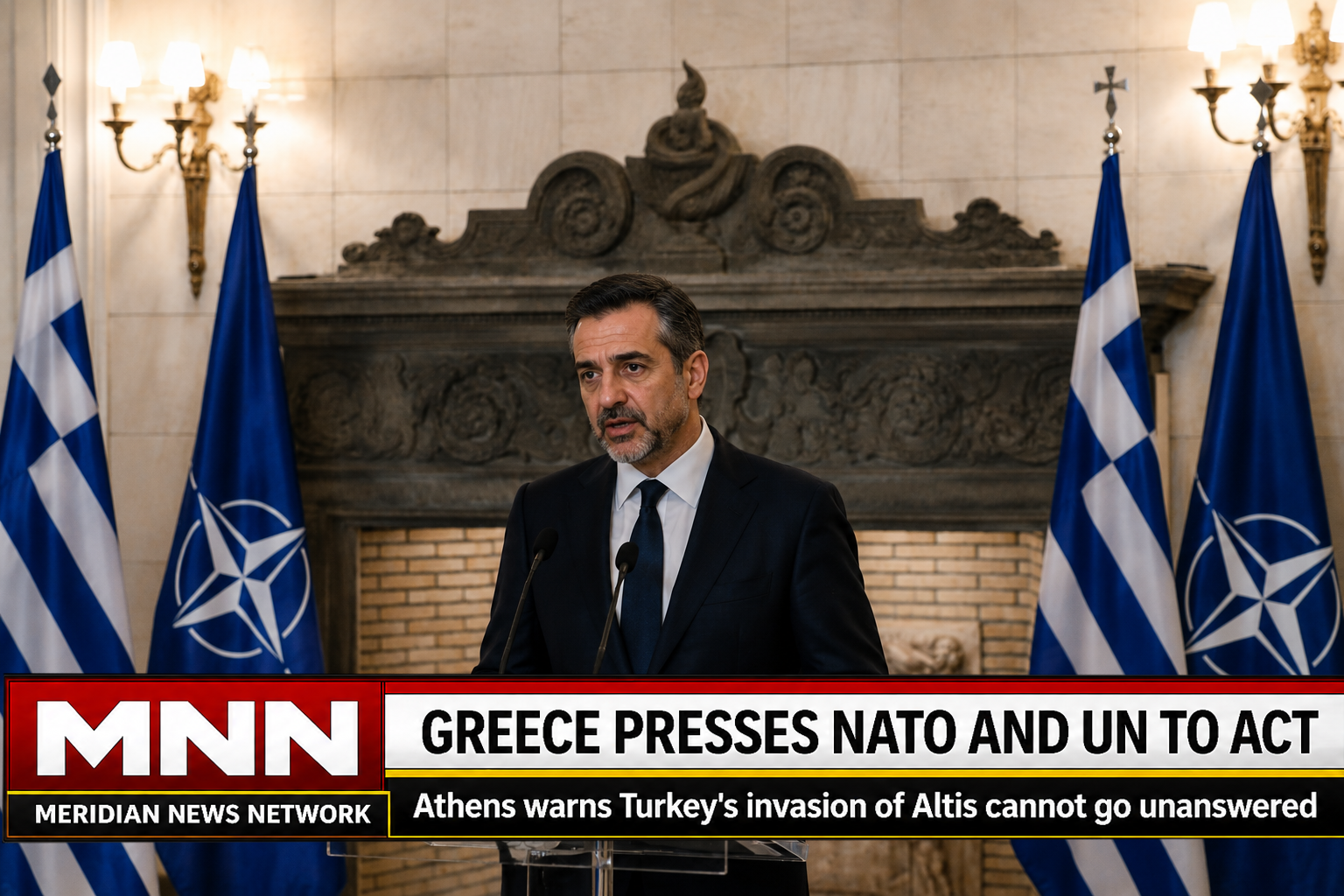
ATHENS, GREECE - Greece has formally pressed the crisis on Altis before both NATO and the United Nations, describing Turkey’s military action on the island as an unlawful act of aggression and arguing that continued passivity would only encourage Ankara to deepen its hold on Altian territory.
Greek officials are not presenting the move as a declaration of military entry into the war. Instead, Athens is trying to internationalize the political cost of Turkish action while still keeping the conflict framed as a question of law, sovereignty, and alliance responsibility rather than immediate Greek-Turkish interstate war.
That distinction is important. Greece wants outside pressure on Ankara. It does not want to give Turkey an easy way to argue that the fighting on Altis has become nothing more than a direct proxy contest between rival regional powers.
Athens Calls for Emergency Consultations
According to Greek diplomatic sources, Athens has requested urgent consultations within NATO and has also pushed for the issue to be taken up at the United Nations as a matter involving sovereignty, regional stability, and the use of force against a recognized state.
Greek officials argue that Turkey’s landing at Molos Airfield, the subsequent killing of Colonel Konstantinos Drakos, and the widening military push beyond the initial foothold cannot be plausibly described as stabilization or infrastructure protection. In their view, the operation is a clear breach of international law dressed in the language of emergency intervention.
A Legal Case Framed Around Sovereignty
Publicly, Athens is placing heavy emphasis on legal language.
Greek officials say Turkey has no lawful right to insert forces onto Altian soil without the consent of the Republic of Altis and Stratis, no right to hold military ground under the pretext of restoring order, and no right to turn a self-created crisis narrative into de facto control over territory linked to the Poseidon Reserve.
This framing is meant to do several things at once. It reinforces the Republic’s own position, puts diplomatic pressure on NATO governments reluctant to confront a fellow alliance member, and creates a record at the UN that Greece can later point to if the conflict widens further.
Why NATO Is So Difficult
Even so, alliance politics remain complicated.
NATO is not designed as a court for punishing one member state at the demand of another, and many governments are likely to approach the crisis with caution, especially while they continue trying to avoid an open rupture between two strategically important eastern Mediterranean actors. That means Greece may succeed more easily in forcing discussion than in forcing decisive alliance action.
Still, Greek officials appear to believe discussion itself matters. If Turkey’s conduct on Altis can no longer be treated as an ambiguous local security matter, then even reluctant NATO capitals may find it harder to continue speaking as though the crisis remains politically containable.
What Greece Wants
Athens has not yet publicly outlined a single formal package of punitive measures. But diplomats familiar with the current push say Greek officials are seeking some combination of political condemnation, coordinated pressure on Ankara, tighter scrutiny of military support and cooperation, and a stronger multilateral defense of Altian sovereignty.
In practical terms, Greece wants Turkey to face consequences even if no immediate military answer emerges.
That is why officials in Athens are talking not only about the illegality of the operation, but about the danger of allowing a regional power to establish facts on the ground and then normalize them through delay.
A Warning Beyond Altis
Greek concern is not limited to the island itself.
Athens views the crisis as part of a broader eastern Mediterranean contest involving regional influence, energy access, alliance cohesion, and the precedent created when a state uses military force to reshape a political dispute involving strategic infrastructure. If Turkey can do this on Altis without meaningful consequence, Greek officials fear the wider implications will reach far beyond the island.
That is one reason the Greek case has been framed in larger terms. This is not only about a bilateral rivalry with Ankara. It is also about whether the postwar legal and diplomatic order around sovereignty still carries weight when tested by a determined regional power.
Public Diplomacy While the Battlefield Keeps Moving
The timing is especially stark because the diplomatic track is unfolding while the military picture on Altis continues to worsen.
With Turkish forces now reported to have broken through AAF lines south of Sofia, Athens is making its case at exactly the moment it becomes harder to argue that Ankara’s operation is limited, temporary, or defensive in any narrow sense. The longer the war continues without coordinated outside pressure, the stronger Turkey’s battlefield position may become.
For Greece, that is the core danger.
It is not only that Altis has been attacked. It is that the attack may harden into a new strategic reality before the international system decides how seriously it intends to respond.
Related coverage
Follow the wider story
Move from the report to the linked operation and adjacent reporting to keep the Poseidon Crisis thread connected.
Republic Denounces Turkish Presence at Molos Airfield
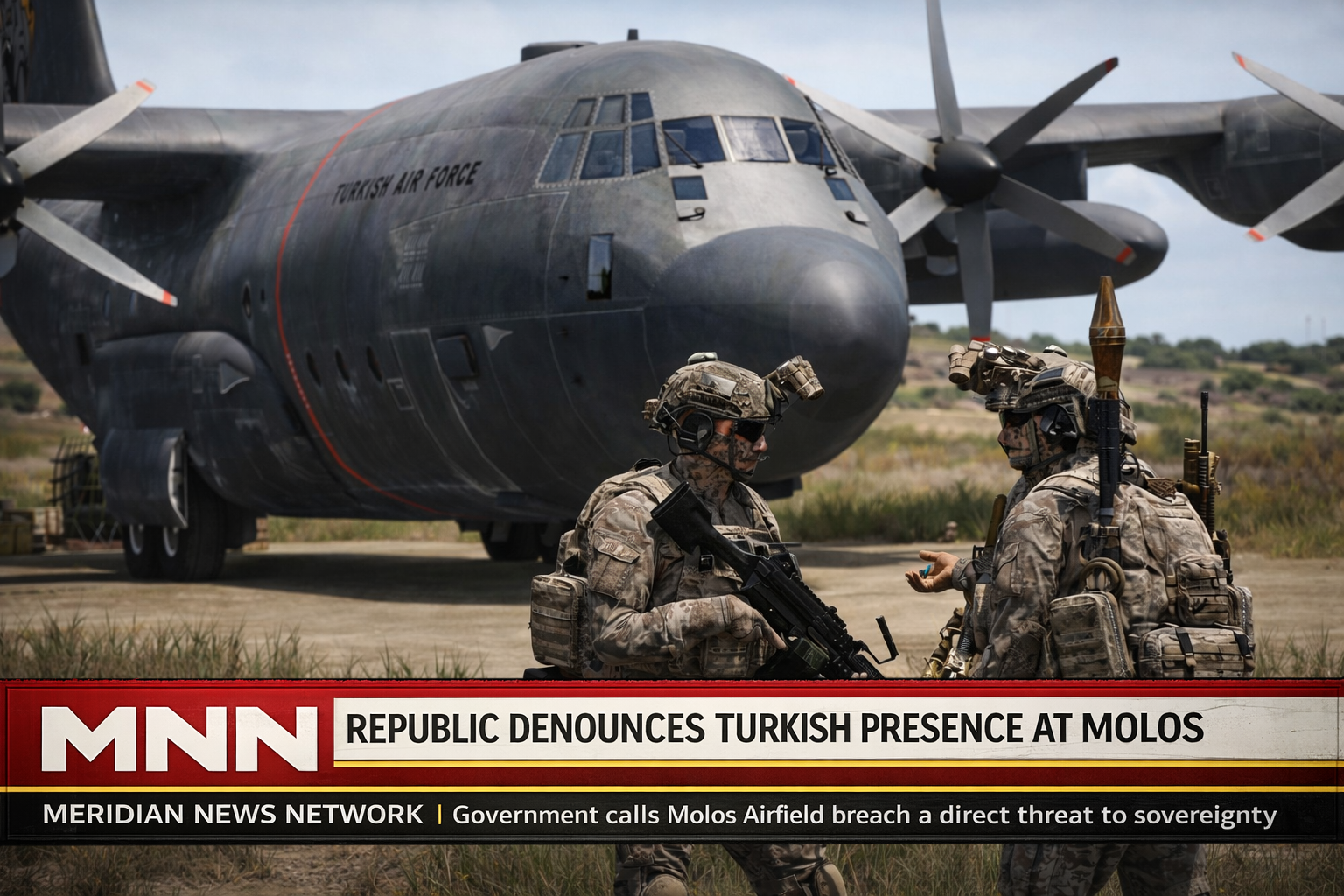
The government of Altis and Stratis says Turkish forces have established an unlawful position at Molos Airfield, marking the clearest rupture yet between covert pressure and open intervention.
Flights Continue Into Molos as Turkish Position Grows
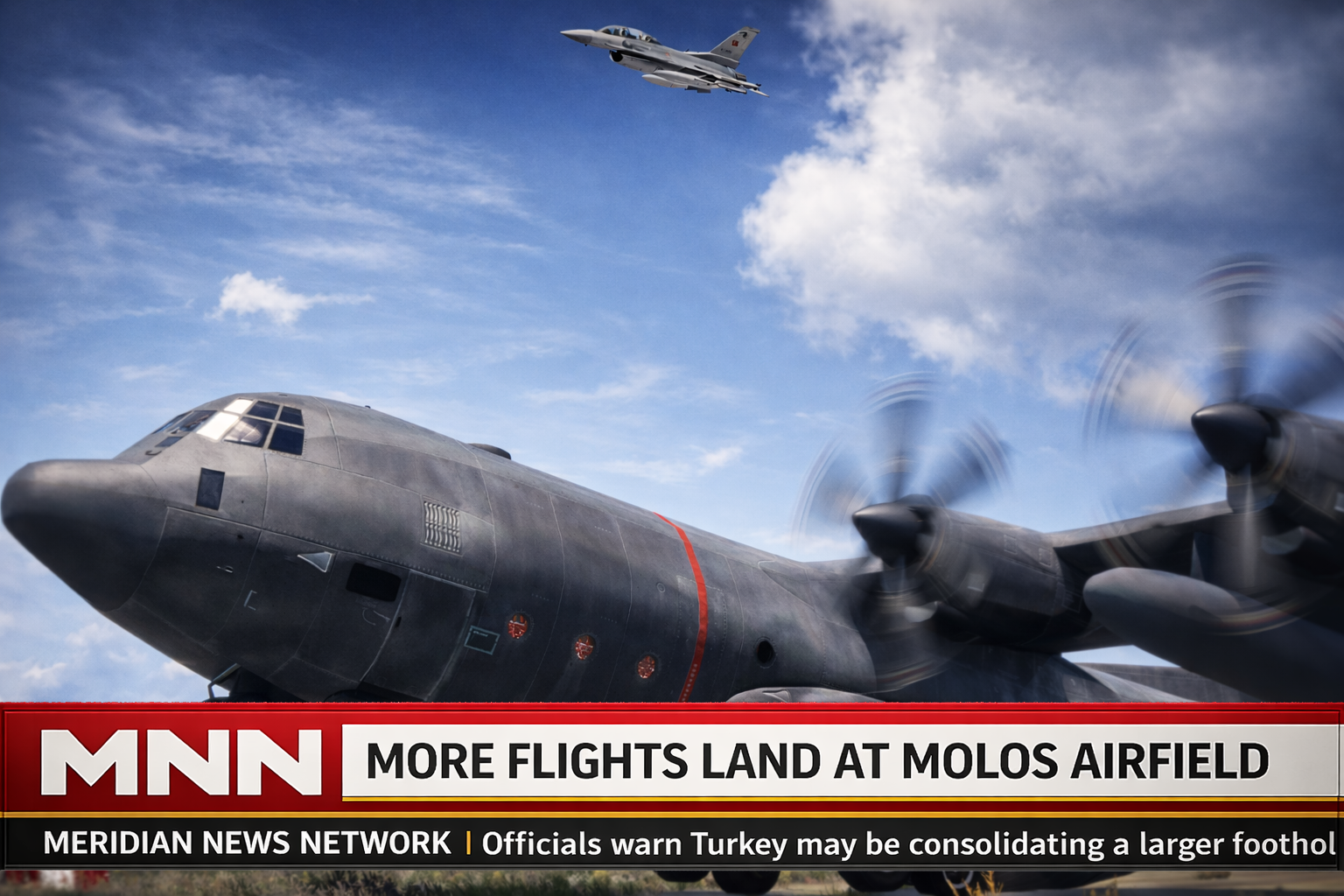
Repeated transport flights into Molos Airfield are fueling fears that Turkey is reinforcing for a larger operation rather than holding a limited position.
Turkish Breakthrough South of Sofia Forces AAF Fallback
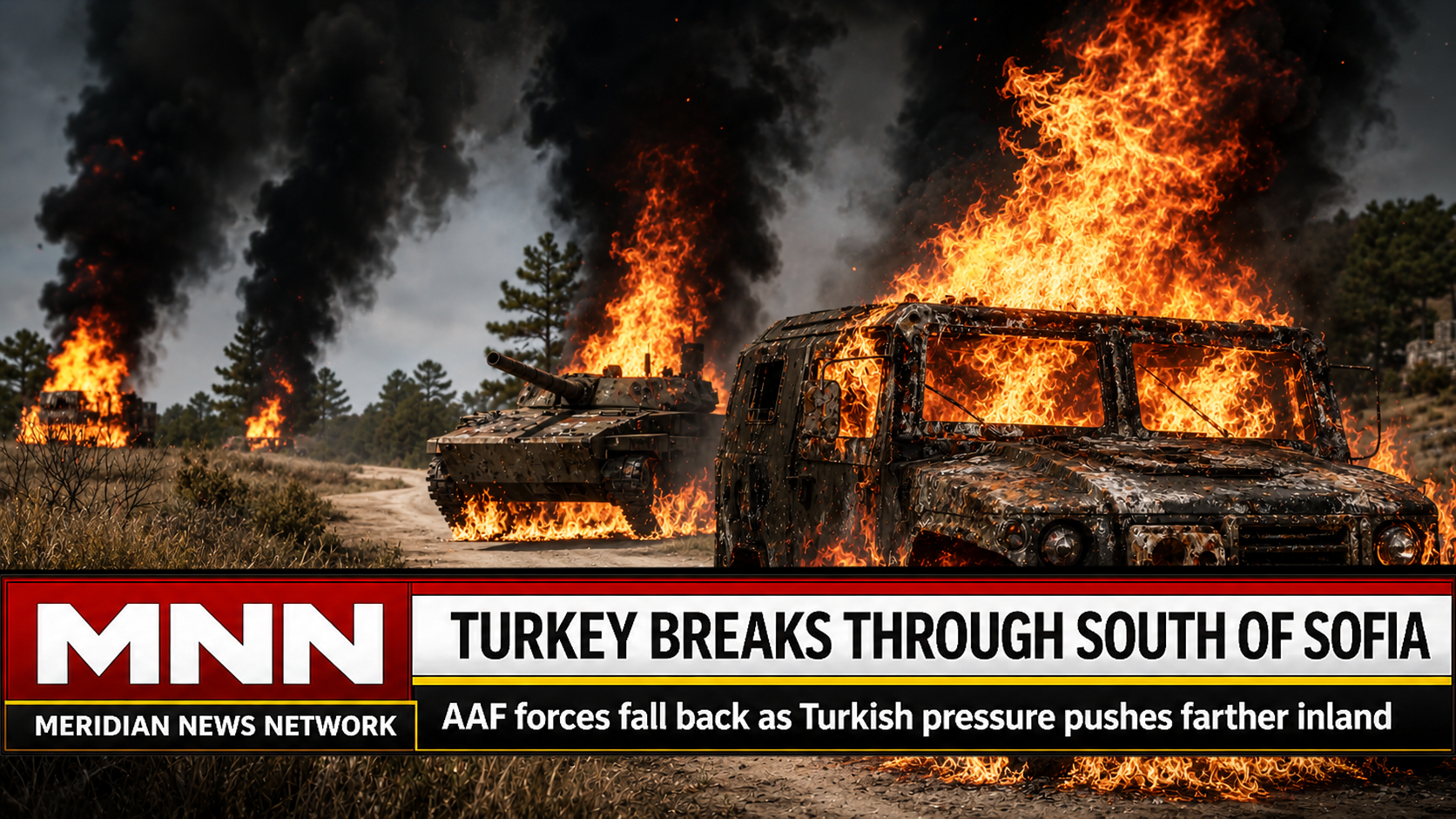
Turkish forces have broken through AAF lines south of Sofia after sustained pressure on the Molos corridor, forcing Altian units into a more urgent fallback and widening concern that the foothold has become a true inland advance.